Guides
Ice cream shop products: ranked sales formats
See five ice cream shop products ranked by sales format and margin per labor hour, from scooped servings and pints to cakes, sundaes, and off-premises sales.
What to take away
For ice cream shop products, the ranked sales formats are scooped cups and cones, hand-packed pints, cakes and party tubs, sundaes and affogato, and carts and wholesale. The order follows margin per labor hour.
- Rank is earned by margin per labor hour, not by how good the flavor tastes. A scooped cup and a hand-packed pint can use the same base and earn very differently.
- Scooped cups and cones rank first because they carry the highest price per unit of dairy and need no packaging, no label and no freezer space beyond the case.
- Hand-packed pints rank secondsame base, less labor per dollar, and they sell in the months the counter is quiet.
- Cakes, logs and party tubs rank third because they are ordered ahead, made in batches, and sell in January as readily as July.
- Carts, catering and wholesale rank lastreal revenue, thin margin, and a cold-chain problem you now own.
Why the ranking is by labor and margin, not by flavor
A flavor is not a product. The product is the format you hand over:
- a cup
- a cone
- a pint
- a cake
- a tray
- a cart Each format uses the same base differently.
Rank them by what one hour of staff time returns, and by how much freezer and case space the format occupies while it waits. That ordering holds whether you sell gelato in a tourist town or hard-pack in a suburb.
Your dairy invoice, wage rate and rent set the real numbers. Calculate them from your own records rather than treating a general range as a shop-specific result.
Typical serving cost
- Scooped cup or cone
- 20 to 30 percent of price
- Hand-packed pint or quart
- 25 to 35 percent with cup, lid and label
- Cake, log or party tub
- 30 to 40 percent with the box
- Sundae, affogato or shake
- 25 to 35 percent with toppings and espresso
- Cart, catering or wholesale tub
- 30 to 45 percent after delivery
Labor per unit
- Scooped cup or cone
- 1 to 2 minutes
- Hand-packed pint or quart
- 2 to 4 minutes
- Cake, log or party tub
- 15 to 30 minutes to build and decorate
- Sundae, affogato or shake
- 3 to 6 minutes at the counter
- Cart, catering or wholesale tub
- 1 to 2 minutes to pack, plus drive time
Freezer and case space
- Scooped cup or cone
- Case space only
- Hand-packed pint or quart
- One pint slot in the hardening freezer
- Cake, log or party tub
- A shelf, a door, and room to hold finished stock
- Sundae, affogato or shake
- Case space only
- Cart, catering or wholesale tub
- A route and an insulated carrier, not shelf space
Margin per labor hour
- Scooped cup or cone
- Highest of the five
- Hand-packed pint or quart
- Second
- Cake, log or party tub
- Third
- Sundae, affogato or shake
- Fourth on labor, high on attach
- Cart, catering or wholesale tub
- Lowest of the five
Margin per labor hour is the price minus ingredients, divided by the minutes that unit takes the team. Freezer and case space costs rent and power, so a slot that holds a slow pint is a slot that cannot hold a cake.
1. Scooped cups and cones
The scooped serving is the highest-margin format in the shop. No package, no label, no hardening freezer, no delivery. The customer pays at the counter and leaves.
Cones cost more than paper cups and let a smaller scoop read as generous, so a shop that pushes cones lowers its serving cost without shrinking the portion the customer sees. Decide which vessel you push instead of letting habit decide.
Serving cost moves with overrun, the air whipped into the mix. High-overrun ice cream fills more cups from one batch than dense gelato does. Cost a scoop from the current dairy invoice, not the one you had at opening.
2. Hand-packed pints and quarts
A pint is the same base with lower labor per dollar and a longer selling window. It goes in the hardening freezer and waits for a Friday night in February.
The costs that do not exist at the counter do exist here: the cup, the lid, the label, the freezer space, and the packs that pass their hold date. A pint of a flavor nobody orders is the same waste in a different container.
packaged product raises labeling questions that the local health authority answers, not a supplier's sales sheet, and a scoop in a cup does not.
3. Cakes, logs, ice cream sandwiches and party tubs
Occasion products are the least seasonal line you can add. Birthdays happen in January. They are made in batches ahead of time, ordered two days out, and priced for the work of decorating and boxing.
They need freezer room, boxes, and a way to hold a finished cake without the door opening forty times a day damaging it. Add them when the freezer has space and the team has time, not before.
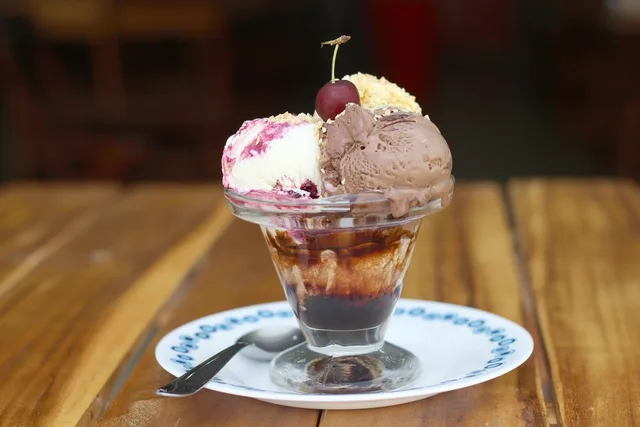
4. Sundaes, affogato, milkshakes and floats
Composed desserts carry the highest labor per sale and the highest attach rate. They sell toppings, sauces and espresso to a customer who already bought a scoop.
They also kill a queue. On a hot Saturday, a sundae assembled to order slows the line behind it. Add them when the counter team can build one without stopping the flow, and watch the attach rate rather than the total.
5. Carts, catering and wholesale
Off-premises sales are low labor per unit and high labor per order. They leave the building, which means cold-chain transport, insulated carriers, and time out of the shop.
Wholesale to restaurants and grocers is a volume business with thin margins. It makes sense as a winter floor, not as a summer strategy, and only when the margin after delivery is positive and the customer pays.
Product categories that carry each line
Ranking formats is the first half. The second half is what actually sits in the case, and a new shop fills that case by category, not by brand list.
| Product | Maker | What it is | Who it suits |
|---|---|---|---|
| Vanilla, chocolate and strawberry hard-pack | Any dairy or co-packer | The three flavors most customers check for first | Every shop; they anchor the case |
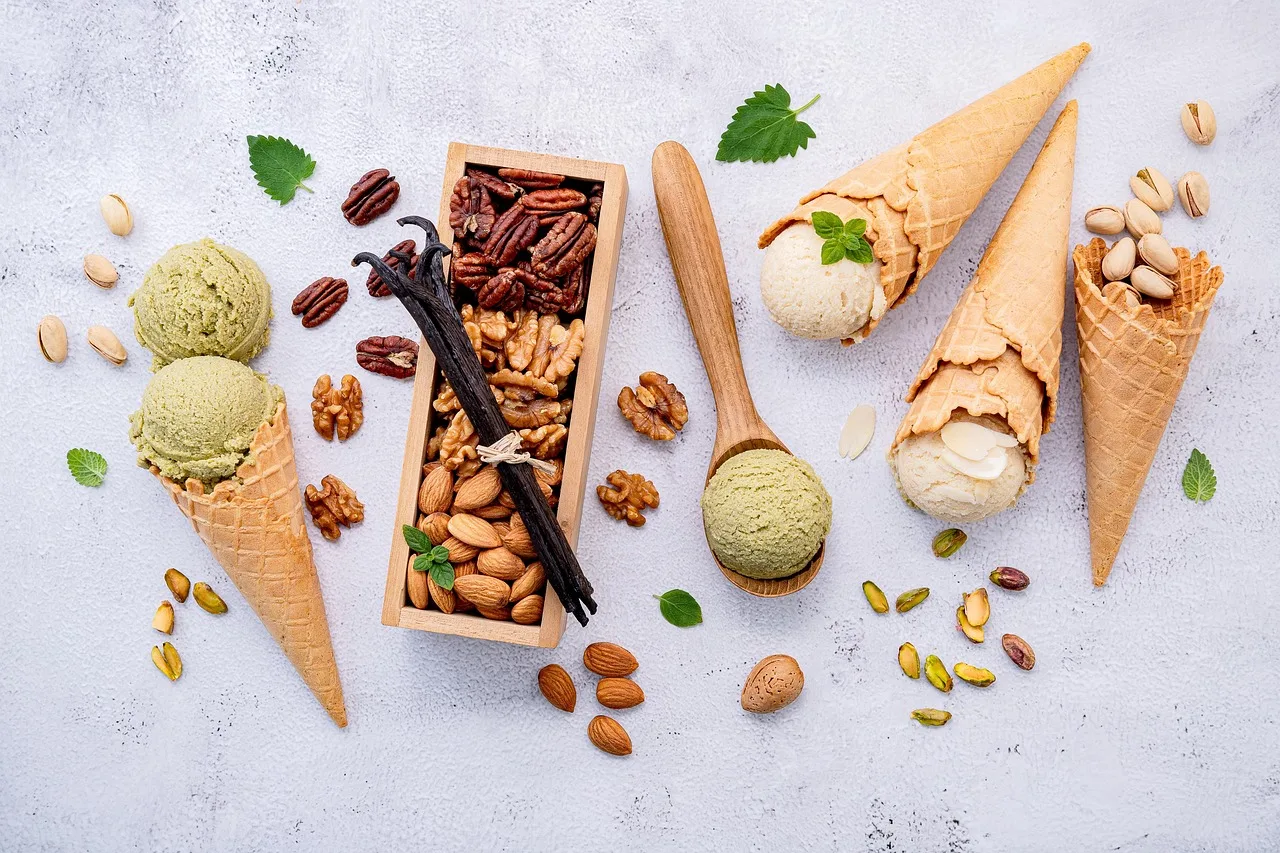
| Stracciatella and pistachio | Gelato makers, house or imported base | Dense, low-overrun gelato with visible inclusions | Shops with a spade case and a slower serve |
| Sorbetto and dairy-free fruit ices | House-made or a bought fruit base | No dairy, so no dairy cost and no dairy allergen | Sites with vegan or allergen-conscious traffic |
| Soft serve | Taylor, Carpigiani, Stoelting machines | A continuous-freeze product served at higher overrun | High-volume, quick-service counters |
| Affogato | House gelato plus a commercial espresso machine | A scoop drowned in a shot, sold at dessert pricing | Business districts at three in the afternoon |
| Ice cream sandwiches and bars | House-made or a regional co-packer | A handheld that freezes and travels well | Carts, events and impulse buys |
| Ice cream cakes and logs | House-made or a local cake co-packer | A decorated occasion product ordered ahead | Shops with freezer room and a phone number |
| Bulk tubs and catering trays | House or a co-packer | A 3-gallon tub or a tray for events | Caterers, offices and party orders |
Brand names matter less than the format they fill. A regional co-packer who supplies half the shops in your state is a real supplier with a real minimum order, and the terms are worth comparing against making it yourself.
The equipment and supplier names behind the products
Batch freezers from Taylor and Carpigiani set how much you can make in a day. Both publish machine capacities and a service network. A service call matters more than the sticker price when a beater seal fails in July.
Dairy comes from a local creamery or a broadline distributor such as Sysco. Ask the creamery for its minimum weekly volume and its drop days before you build a menu around it. A broadline distributor sets a minimum order value per delivery, so put cups and cones on the same truck.
PreGel supplies bases, pastes and variegates. Ask for the minimum order quantity, the lead time from order to delivery, and whether the base ships frozen. Freight and a frozen minimum decide whether a bought base earns its freezer slot.
Cups, cones, lids and labels come from a packaging distributor, and the cone is often the single most expensive disposable in the shop. Price the cone against the cup before you decide which one to push.
Where the shortlist sits in the opening plan
The overall opening sequence puts this menu phasing inside the larger launch plan. Open with the fewest flavors the case looks full with, and fill every pan.
After the first month, apply a removal rule: any pan that goes back half full more often than not is cut or made in a smaller batch. A menu without a removal rule quietly composts dairy.
Add pints of the top sellers, then occasion products, then off-premises when a specific customer asks. Running the range afterward is management work: staff to train, stock to rotate, suppliers to chase, and a case to keep full through evenings and weekends.
What the records and the regulators ask for
The IRS asks small businesses to keep records that support gross receipts and purchases, and its Internal Revenue Service: What kind of records should I keep? page lists what counts. A point-of-sale set up by format, not by flavor alone, gives you those records and your margin per line from the same data.
Which agency governs retail food in your state, and whether packaged product for off-premises sale changes anything, is answered by the body named in the U.S. Food and Drug Administration: State Retail and Food Service Codes and Regulations directory. Ask before you print a label.
Words like "homemade", "natural" and "farm fresh" on a menu board or a pint are advertising. The Federal Trade Commission: Advertising FAQs: A Guide for Small Business sets out the general rule that claims must be truthful and supportable. If you did not make it, do not call it homemade.
Allergen handling, pasteurization and sanitation are questions for your local health department and for ServSafe-trained staff, not for a supplier's sales sheet. The U.S. Bureau of Labor Statistics: Food Service Managers job description stresses supplies, sanitation and unsociable hours, which is an honest picture of what owning this menu looks like once it exists.
Common questions
Why is a scooped cup ranked above a pint?
Because it carries no package, no label, no freezer space and no delivery, so more of the price stays with you. A pint uses the same base but adds costs the counter does not have.
Do I need branded products to open?
No. Vanilla, chocolate and strawberry anchor almost every case, and a regional co-packer can supply them while you build your own flavors. Named equipment and suppliers matter more than named flavors at the start.
Is wholesale worth adding?
Only if the margin after delivery is positive and the customer pays on time. Treat it as a winter floor, not a summer strategy, and cost the drive before you agree to it.
Can I call a bought base homemade?
That is an advertising claim, and the FTC's general rule is that claims must be true. If the base was made elsewhere, describe it accurately on the board and the label.