Guides
Ice cream shop products packages: fields to record
Ice cream shop products packages: fields to record for pints, cakes and catering, the federal label elements, the allergen rule and how long to keep records.
What to take away
- Packaging frozen dessert is a cold-chain problem before it is a design problem. Everything you hand over is melting from the moment it leaves the case.
- Ice cream shop products packages each need a separate specification: container, fill, seal, label, hold time, and longest expected journey. If you cannot write it, you are not ready to sell it.
- Labeling for take-home and off-premises sale may carry requirements that a scoop in a cup does not. The state agency that governs retail food is the one to ask.
- Words on the package are advertising. Say only what is true.
The problem packaging has to solve
A scoop in a cup is eaten in ten minutes on the pavement. A pint goes into a bag, travels fifteen minutes home, waits on a counter while someone finds the freezer key, then is opened three days later.
A party cake sits in a car for an hour in August. Each is a different cold-chain problem, and once the product leaves the counter, the package is the only thing you control.
This page lists fields to record for take-home pints, cakes, and catering. Fill them in for each product you package, and keep the specification with the rest of the menu structure so it changes when the menu does.
The specification, field by field
For each packaged product, record these fields:
- Container:Type, material, and size, plus any support needed to protect the product.
- Fill:The amount and whether it is sold by volume or weight; record the packing method, too.
- Seal:The lid or other closure, and how you check that it is secure.
- Label:Ingredients, allergens, quantity statement, and producer name and address as items to confirm with the state retail-food agency before printing.
- Hold time:The maximum time the packaged product is intended to remain outside the freezer, based on the process you use. Do not guess this field.
- Longest journey:The longest expected route and how the product will be kept cold during it. For catering, record the carrier, cold packs, thermometer, and temperature log.
- Batch:A batch or lot code and the date of making, written on the lid and in the record, so a complaint or a recall can be traced to one batch.
- Destination:Counter sale, catering client or wholesale buyer, so you know where each batch went.
As a record sheet, one row per product looks like this:
| Field | What to write | Example entry |
|---|---|---|
| Product | Name as it appears on the label | Vanilla bean, take-home pint |
| Batch | Lot code and date made | Your own code and date |
| Container | Type, material, size | Lidded paper pint |
| Fill | Volume or weight, packing method | By weight, filled from the batch freezer |
| Seal | Closure and how it is checked | Lid pressed on, checked by hand |
| Label | Elements present and version date | All federal elements, version in use |
| Hold time | Maximum time out of the freezer | From your own process |
| Longest journey | Route and cold method | Customer car, insulated bag |
| Destination | Counter, catering client or wholesale buyer | Counter sale |
Packaging specification fields
- Containermaterial, size, freezer rating, lid seal
- Fill method and levelhand-packed or machine filled
- Seallid, tamper band, or shrink
- Hold time in shop and discard date
- Journey ratinglongest time without freezer
- Label contentname, flavor, required, added
The contribution arithmetic for each product line uses the vessel cost as a variable; the specification is where that cost comes from.
Take-home pints and tubs
The pint is the workhorse of the winter. Its problems:
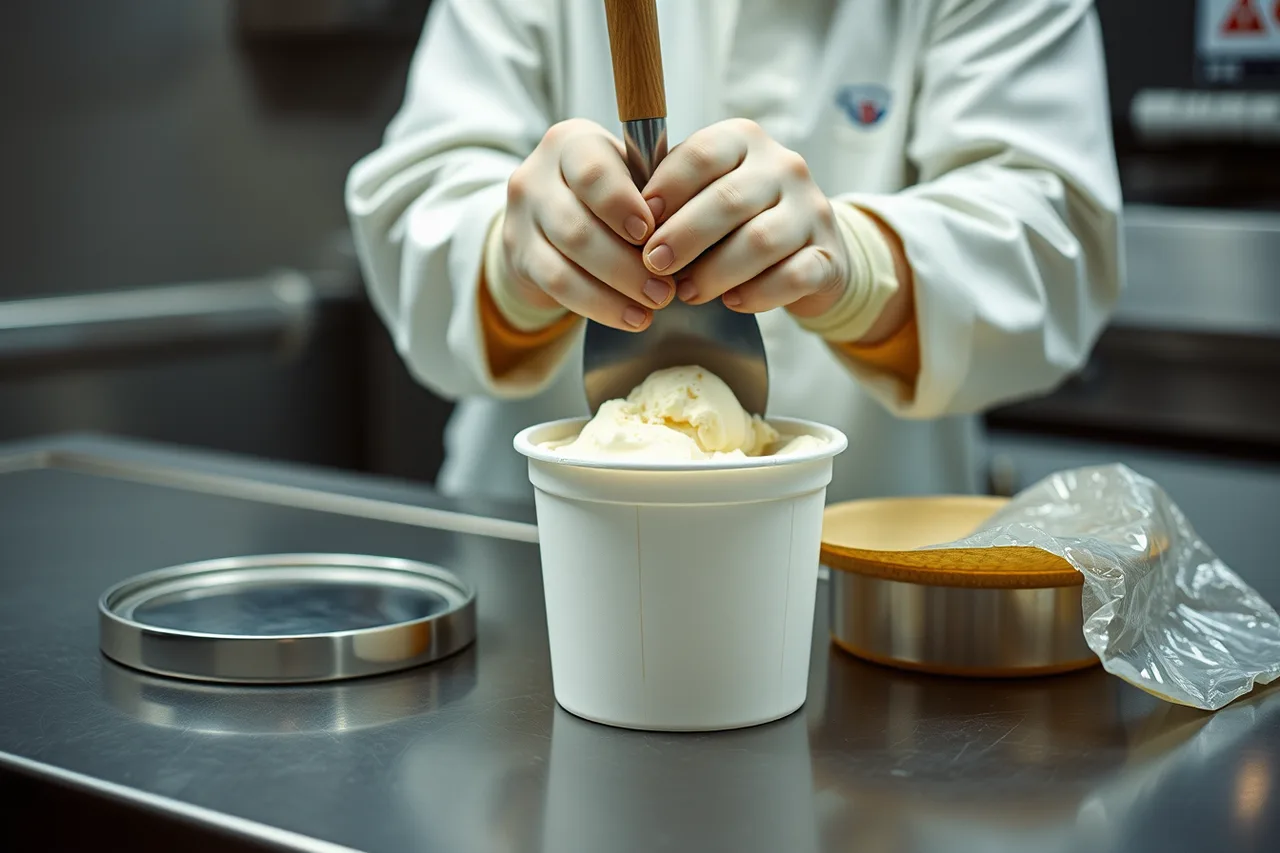
- Surface ice. Product filled warm, or with a headspace full of air, grows crystals on the top. Fill cold, fill full, press a film or a liner onto the surface if your process allows.
- Weight variance. Two hand-packed pints can differ noticeably in product weight. If you sell by stated volume, check what the authority says about declared quantity; if you sell by weight, weigh.
- The journey. Tell the customer at the till how long the pint can be out of a freezer, and put an insulated bag on the price list rather than giving one away or not having one.
Cakes, logs and occasion products
These are the highest-value packages and the most fragile. The specification adds:
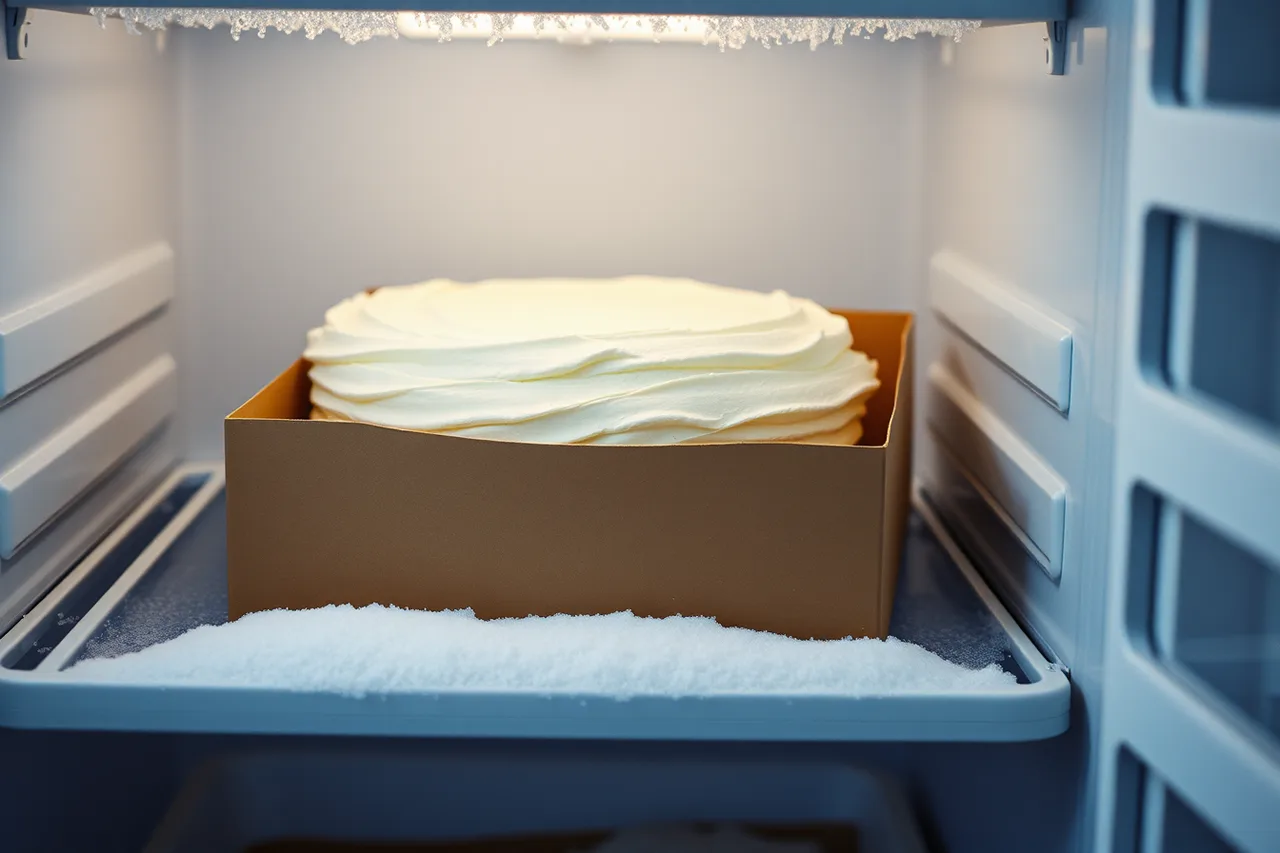
- A box that supports the product from below, so a soft cake is not lifted by its edges.
- A stated collection window and a note that the product must go straight into a freezer.
- A way to hold the finished cake where the door of the freezer does not open forty times a day. The hardening freezer, not the case.
- An order-ahead process, so the cake is not made speculatively and thrown away.
Catering, carts and wholesale
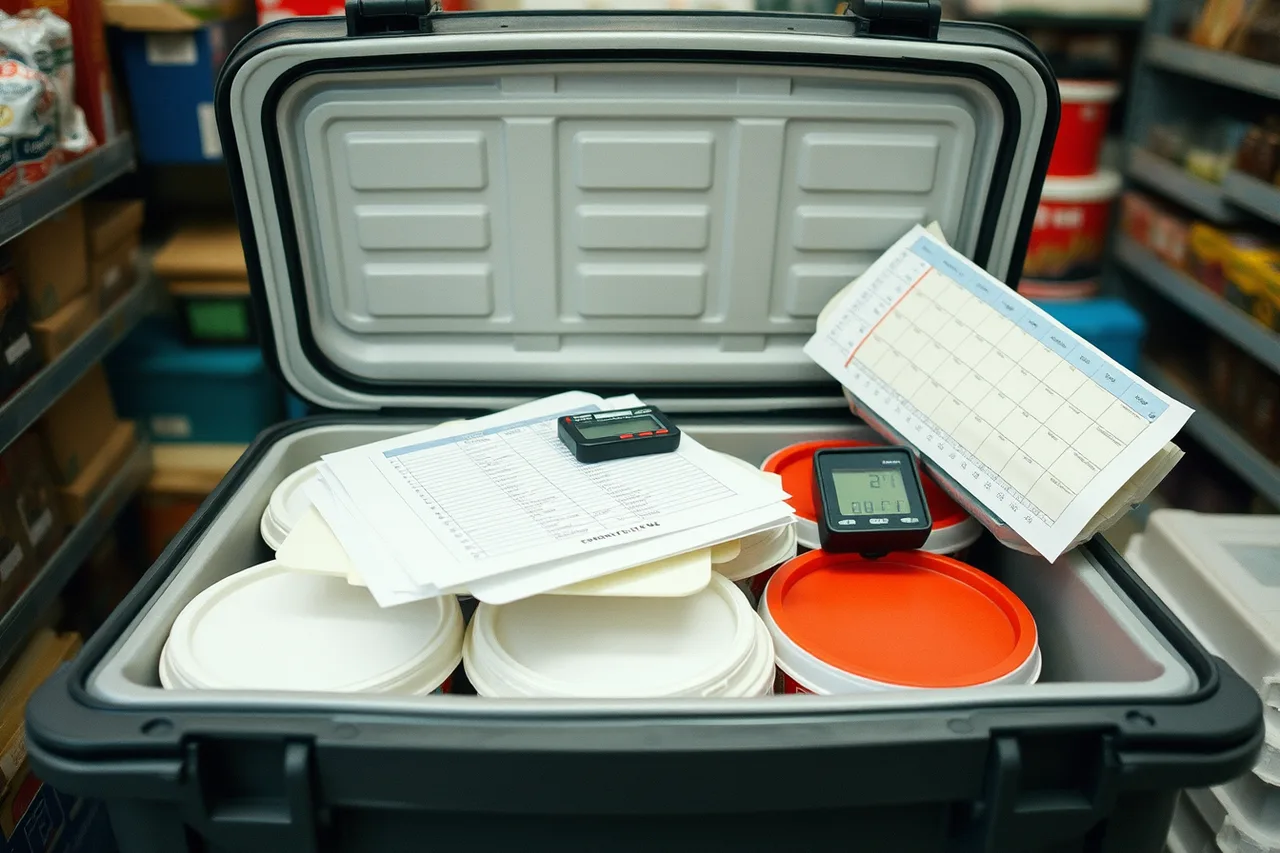
Cold-chain transport is required for product leaving in quantity: insulated carriers with cold packs, dry ice where your process and authority allow, a thermometer, and a written temperature log for the journey.
Whether the receiving restaurant or grocer requires anything specific is their question. The terms of any off-premises arrangement should say who is responsible for the product from the moment it leaves your freezer.
What the label may need
This is the part where the internet is least reliable. A sealed pint sold for off-premises consumption is packaged food to many authorities. Packaged food needs a label that a scoop does not, and the federal rules name the core elements.
Under the federal Food Labeling regulations in 21 CFR Part 101, the label of a food in packaged form must state conspicuously the name and place of business of the manufacturer, packer, or distributor (21 CFR 101.5), and the principal display panel must bear a declaration of the net quantity of contents, in terms of weight, measure or numerical count (21 CFR 101.7). The place of business includes the street address, city, State, and ZIP code. Ingredients required to be declared are listed by common or usual name in descending order of predominance by weight (21 CFR 101.4).
Allergens have their own law. The Food Allergen Labeling and Consumer Protection Act of 2004 (FALCPA) requires that foods containing a major food allergen be labeled with the name of the allergen source. The FDA's food allergen page lists the major food allergens as milk, eggs, fish, Crustacean shellfish, tree nuts, peanuts, wheat, soybeans, and sesame, and it draws exactly the line an ice cream shop needs. FALCPA's labeling requirements extend to retail and food-service establishments that package, label, and offer products for human consumption, but they do not apply to foods placed in a wrapper or container following a customer's order at the point of purchase.
In practice: a pint packed ahead and sold from a freezer needs an allergen statement; a pint packed to order at the counter does not fall under FALCPA's labeling requirements. A dairy ice cream contains milk, so its pre-packed pint declares at least that.
Which further elements apply to you, and in what form, depends on where you are and how you sell.
Ask the agency that governs retail food in your state before the first print run. The U.S. Food and Drug Administration: State Retail and Food Service Codes and Regulations directory names that agency and links to the code it applies.
Ask at the same time whether the answer differs for product sold wholesale to another business. The licensing questions this trade raises include it.
What you may say on the package
Everything printed on a pint is advertising. The Federal Trade Commission: Advertising FAQs: A Guide for Small Business states the general principle: claims must be truthful, and you must be able to back them up.
"Small batch," "handmade," "natural," and "local" all mean something to a customer, and each must be true in the plain sense. If a base is bought in, do not say the product was made from scratch.
Records to keep
Packaged product creates records a counter does not: fill weights, batch dates, discard dates, and what went out to which wholesale customer.
Beyond operational use, IRS general guidance covers the purchase and sales records a small business should hold. Set out at Internal Revenue Service: What kind of records should I keep?, it applies to every pint sold. A batch date on the lid and a line in the till by product does both jobs at once.
How long to keep them follows the same IRS guidance. Generally, records that support an item of income, deduction or credit on a tax return are kept until the period of limitations for that return runs out, which for most returns means 3 years. Employment tax records are kept for at least 4 years after the tax becomes due or is paid, whichever is later.
Training the counter on it
The specification only works if the person at the counter follows it.
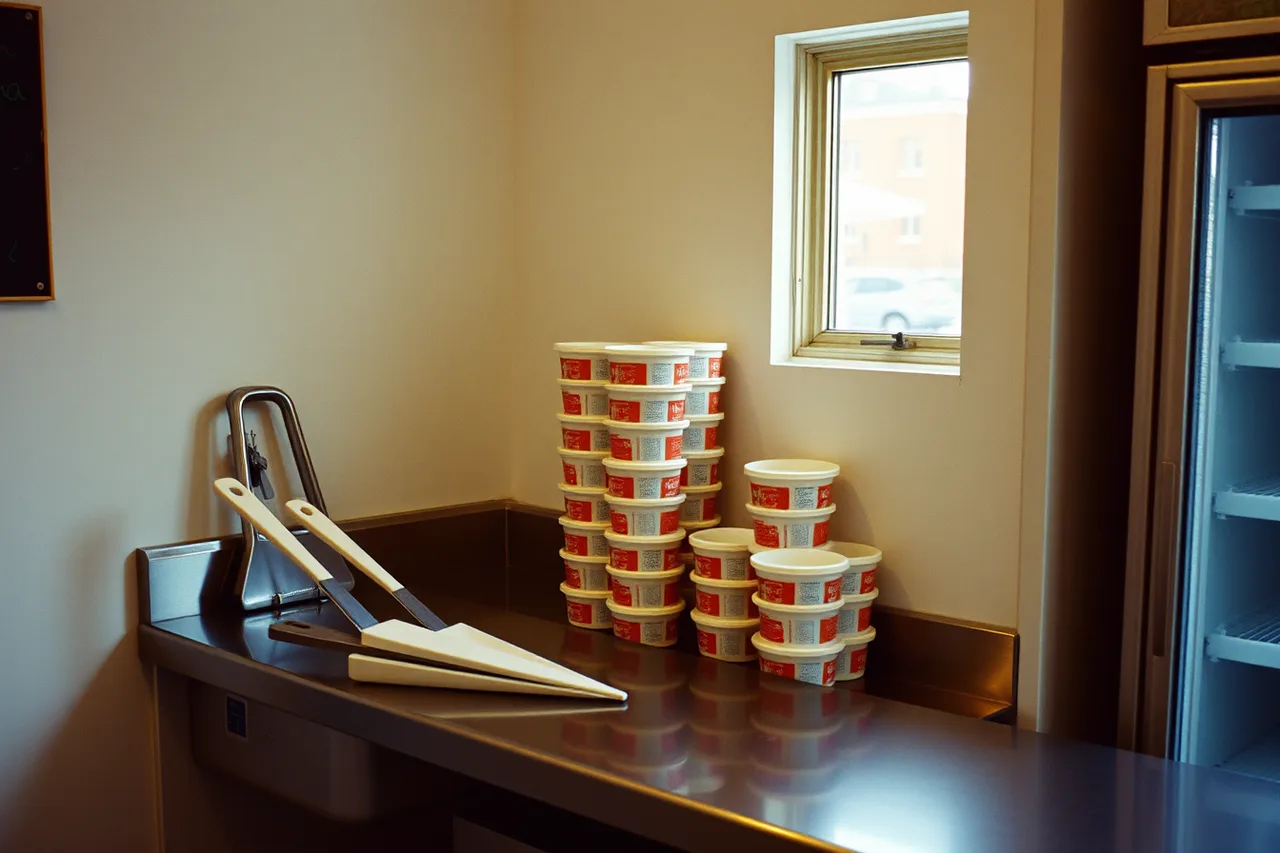
A summer hire packing pints from the case with a warm spade, leaving air under the lid, and forgetting the insulated bag undoes it in a minute. Put the packing steps into counter-team training and post the specification on the wall by the packing station.
Common questions
Do I need a full ingredient label on a pint?
If the pint is packed ahead and sold from a freezer, plan on it: federal rules require the name and place of business, the net quantity, the ingredient list, and the allergen source under FALCPA, and your state may add more. A pint packed to order at the counter is outside FALCPA's labeling requirements. Ask the state agency the FDA directory names for the rest. Do not guess and do not copy another shop's label.
Should I give away insulated bags?
Put them on the price list. A bag that is given away is a cost that rises with your best sales; a bag that is sold is a product.
Can I ship pints?
Only with a cold chain that survives the carrier's delays, which usually means dry ice and a carrier that accepts it, plus whatever the authority requires for product sold across state lines. That is a different business, and the questions are for the authority and the carrier before they are for this page.