Guides
Gelato delivery cold chain in Miami: FDA temperature limits, packaging, route plans
Gelato delivery in Miami: how the cold chain holds from freezer to doorstep, with FDA temperature limits, dry ice packaging, inspections and a summer route plan.
What to take away
- A working gelato delivery Miami cold chain keeps product at 0 F or below from the shop freezer to the customer's hands, with no partial thaw on the way.
- The FDA Food Code sets the temperature control rules that Florida and Miami-Dade adopt for retail food, including delivery and mobile units.
- Miami-Dade health inspections cover your commissary, your vehicles and your cart or mobile operation, not just the storefront.
- Insulated liners plus dry ice or gel packs are the standard packaging stack; dry ice needs venting and a label.
- A written route plan with a cooler log is what holds temperature through a July afternoon in Miami.
How Miami heat stresses the gelato cold chain from freezer to doorstep
Miami runs a wet-bulb climate most of the year. Air temperature in the low 90s with high humidity pushes the heat index well above the dry-air number, and a gelato tub sitting in a van loses its surface chill fast.
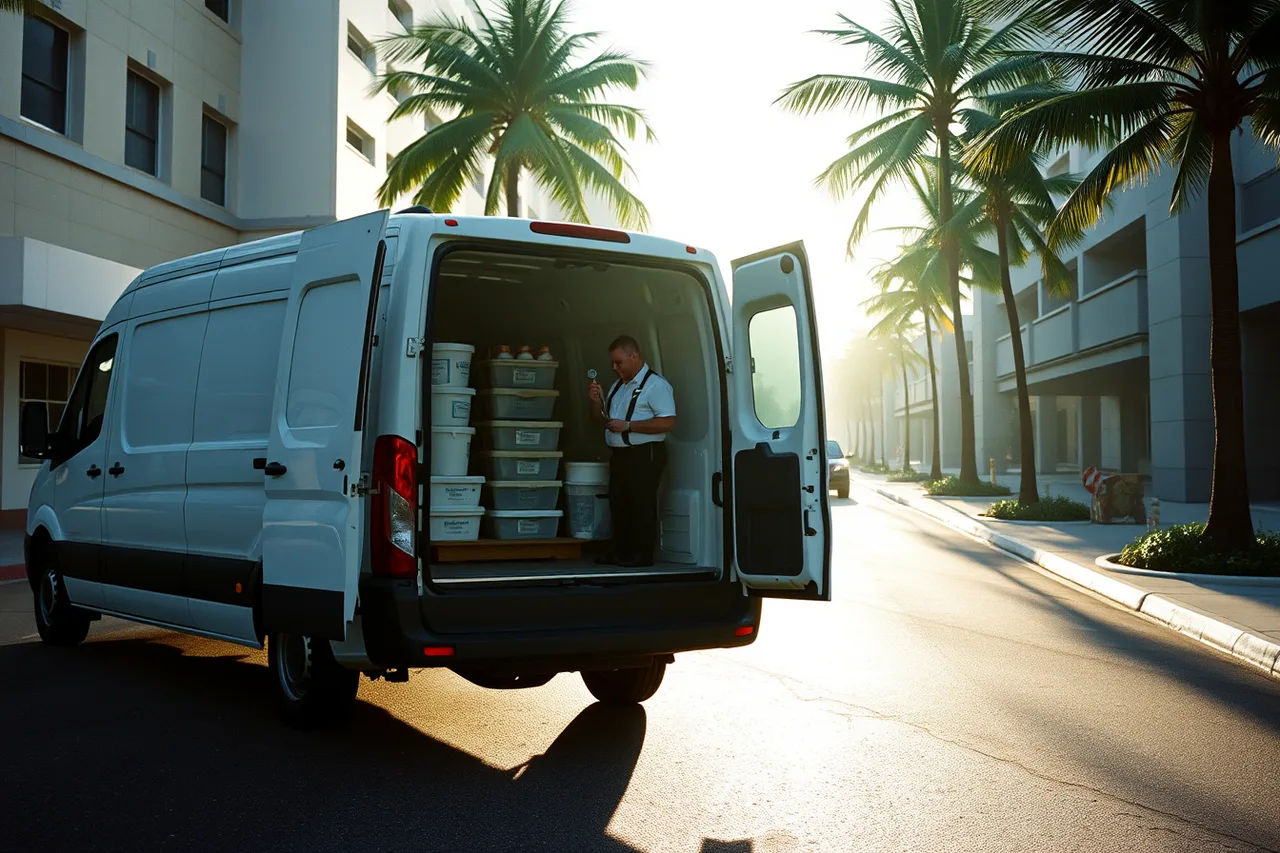
The freezer case in the shop is not the hard part. The hard part is the four minutes between the walk-in and the customer's door.
Gelato is more vulnerable than hard-pack ice cream. It is served and often stored at a higher temperature, with more air and less fat, so it softens sooner once ambient heat reaches it. A pint that sweats through its liner has already crossed the line where refreezing produces ice crystals and a grainy texture.
Tourism adds a second stress. Brickell, Wynwood, Miami Beach and Little Havana orders stack up in the same evening window, and a driver idling on the MacArthur Causeway in August is burning hold time. Treat every stop as a countdown, not a delivery. This is the same cold-chain problem every frozen product business faces, just with more humidity.
Rain is the other Miami variable. Afternoon storms force doors open, soak cardboard and slow drivers. A soaked outer carton loses most of its insulating value, so waterproof outer packaging is not a nicety here.
FDA food safety guidance on temperature control during delivery
The FDA Food Code is the model rule set that state and local agencies adopt, and Florida adopts it through its own food code and Department of Business and Professional Regulation rules. The 2022 edition spells out cold holding and freezer requirements that apply to any food you sell, including frozen desserts moved by vehicle.
Under the Food Code 2022 | FDA, frozen food must be kept frozen and cold food held at 41 F or below. A delivery vehicle is a food storage location during the trip, so the same limits apply. If your gelato is meant to stay frozen, the load must stay frozen.
The FDA Food Code | FDA is not federal law on its own. It becomes enforceable when a state or local agency adopts it, which is why your inspector, not a Washington office, is the person who signs off on your operation. Read it as the baseline your local rules are built from.
Two more FDA-era habits matter. Keep a written procedure for what happens when a load warms up, and keep records. An inspector who sees a temperature log with gaps will ask harder questions than one who sees a log with a single flagged and corrected event.
Heat also hits your staff. Drivers, cart operators and kitchen crews in a Miami summer face real heat illness risk, and the Heat - Overview: Working in Outdoor and Indoor Heat Environments | Occupational Safety and Health Administration guidance on water, rest and shade applies to outdoor cart and loading work.
Build breaks into the route, not around it.
Miami-Dade health inspections for delivery and mobile operations
The Florida Department of Health in Miami-Dade County and Miami-Dade County regulatory units share oversight depending on what you operate. A retail gelato shop is inspected as a food establishment. A vehicle that stores or transports food, and a mobile cart or truck, are inspected as part of that same permit or under a separate mobile food permit.
Expect the inspector to look at three things beyond the storefront. First, the commissary or base of operations where the vehicle is cleaned, stocked and parked. Second, the vehicle itself: its refrigeration, its thermometers, its interior surfaces and its sanitation. Third, your records: temperature logs, cleaning schedules and staff food handler credentials.
Florida requires food handler training for employees who work with food, and a certified food protection manager for the establishment. ServSafe is the common route. Keep certificates where an inspector can see them without a search.
Permits are local. Zoning, business tax receipt and health permit are separate steps, and a mobile unit may need approval for each spot it parks. A compliance checklist built around your actual vehicles and routes saves a failed inspection later.
Reinspection fees and stop-sale orders are the real cost of a bad score. The fix is boring: logs, labels, thermometers and a clean vehicle.
Packaging choices: insulated liners, dry ice and gel packs
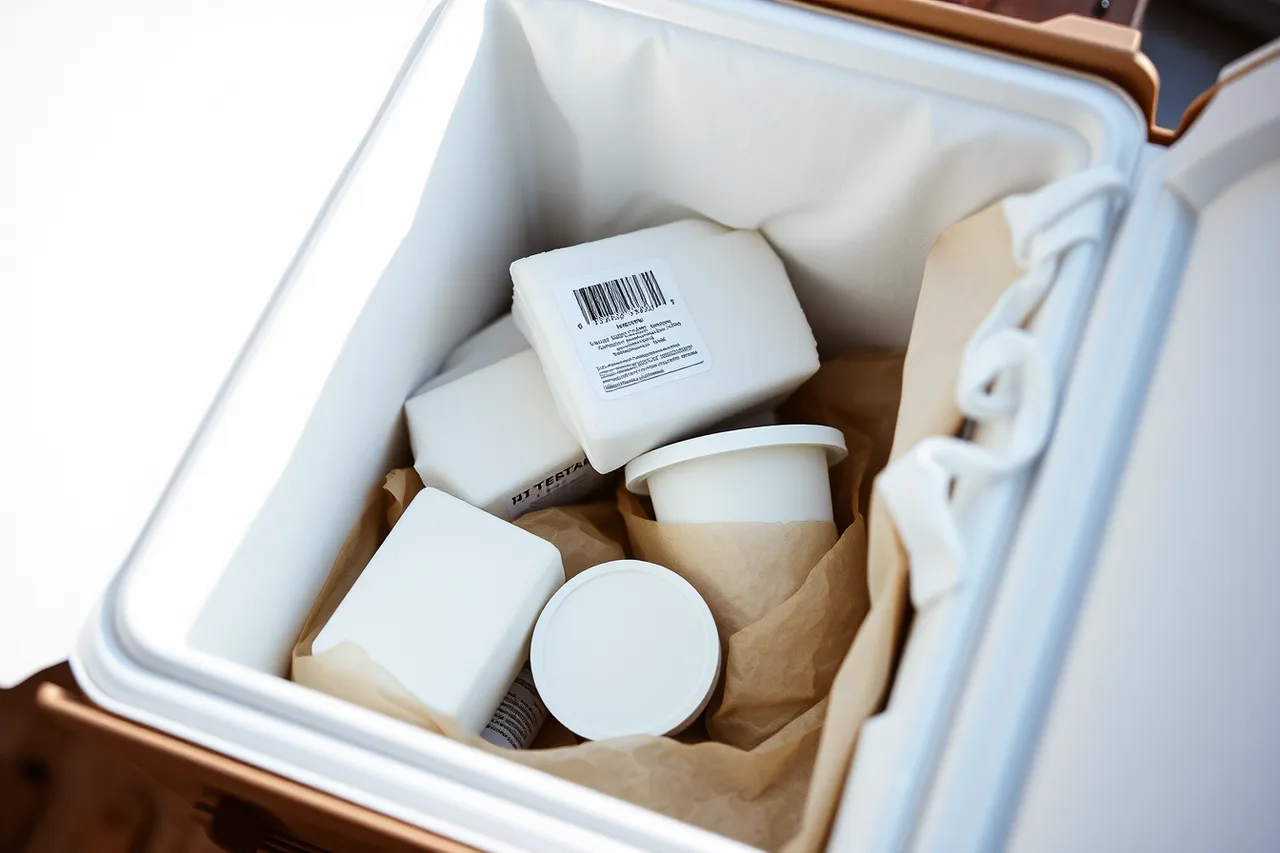
Miami gelato packaging has one job: hold frozen product through a humid handoff. Three layers do most of the work.
Packaging choices
What it does
- Insulated liner
- Slows heat transfer around the tub
- Refrigerant
- Pulls heat out of the box
- Outer carton
- Protects the liner and carries labels
Miami note
- Insulated liner
- Foil or bubble liners beat plain cardboard in humidity
- Refrigerant
- Dry ice for long routes, gel packs for short ones
- Outer carton
- Waterproof outer layer for storm season
Dry ice is the strongest option and the one with the most rules. It sublimates at about -109 F, so it keeps gelato hard for hours. It also releases carbon dioxide, which means the box cannot be sealed airtight and the package needs a warning label. Never let a customer handle it bare-handed.
Gel packs are safer for short runs and for orders a customer will open within the hour. They are reusable, which customers like, and they need freezer space back at the shop. Size the pack to the box, not to habit.
Pints need more protection than catering trays because of surface-to-volume ratio. A small tub warms faster than a large one. Your inventory and sourcing decisions on container size feed directly into packaging cost per order.
Label every package with the product, the date, and handling instructions. A short customer note on dry ice handling prevents burns and complaints.
A delivery route plan that holds temperature in summer
A route plan is a temperature plan. Build it once, then tune it against your logs.
Delivery route plan
- Load only pre-chilled, fully frozen product into a pre-cooled cooler or vehicle compartment. Never load warm stock and expect the cold to catch up.
- Group stops by geography and time window, with the longest single leg first. Miami traffic punishes backtracking more than distance does.
- Cap the number of stops per cooler. When the cooler is full, the route is full; extra stops go to a second run.
- Check and record the load temperature at departure, at the midpoint and at the last stop. Three readings catch a failing cooler early.
- Return any load that broke temperature to the shop for evaluation, and never refreeze and resell it as fresh.
Use this pre-shift checklist before the van leaves.
- Vehicle or cooler compartment pre-cooled and holding temperature
- Thermometer calibrated and readable
- Dry ice or gel packs charged and correctly sized
- Liners dry, undamaged and sealed
- Route sheet printed with stop order and time windows
- Temperature log sheet and pen in the cab
- Driver water and shade break scheduled
Pair the route with your stock control checklist so packaging, refrigerant and product counts are reconciled at the end of each day. Small shortages show up as warm deliveries before they show up as lost sales.
For a worked example, take a Saturday run of 14 stops across Miami Beach and Downtown. Load at 4:00 p.m. with a dry ice layer on the bottom and a gel pack on top, and log 0 F at departure. Run the beach stops first while the van is coldest, then cross to Downtown.
Log again at stop seven. If the midpoint reading is above 10 F, shorten the route next week or add refrigerant. That single number is your inventory planning signal for how much product one van can safely carry.