
Guides
Ice cream shop KPIs: the monthly dashboard that matters
The monthly numbers a scoop shop should actually track, each defined precisely, with the seasonal comparison rule that stops any of them lying to you.
What to take away
- Track few numbers and track them for years. Six well-defined measures read every month beat thirty on a dashboard read never.
- Every number here is compared with the same month a year earlier. Comparing September with August in a seasonal trade tells you about the weather and nothing about the shop.
- Define each measure once, in writing, and do not change the definition. A redefined measure destroys the history that made it worth having.
- Half of these come from the till, and they are only available if the till was set up by line and by hour before the season started.
The rule that makes any of this work
A scoop shop's monthly numbers move for one dominant reason: how warm it was and how many dry weekends the month contained. That single fact invalidates most conventional monthly reporting.
So: compare to the same month last year, note the weather beside every month, and treat any month with unusual weather as a data point with an asterisk rather than a verdict. Two years of honest monthly records are worth more than any benchmark from elsewhere.
Where the numbers come from, and how to set a till up so they exist at all, is covered in the four systems a shop needs.
The six measures
1. Sales, split by warm days and cool days.
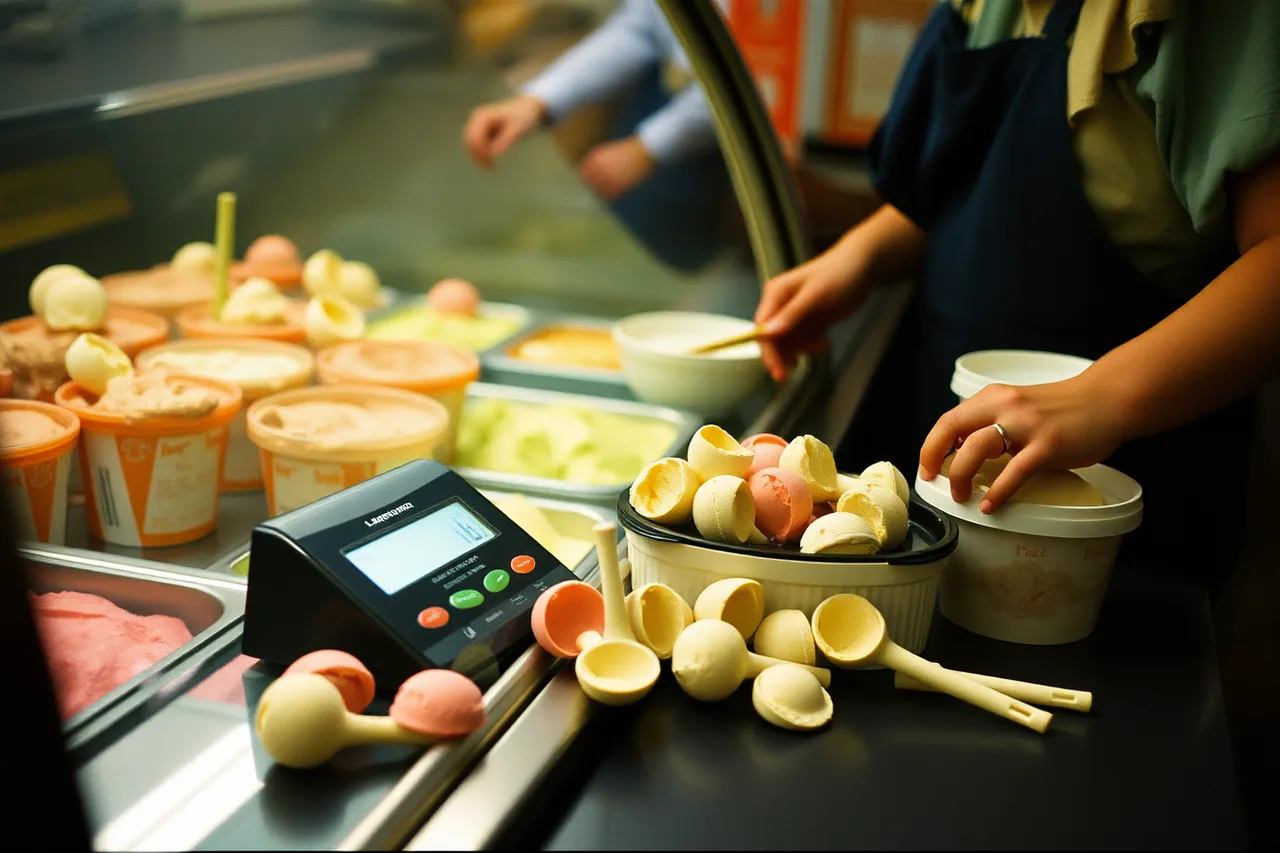
Definition: total takings for the month, with the trading days separated into warm and cool by a rule you set once and keep. Why: a flat month with more warm days than last year is a bad month wearing a disguise.
2. Sales by product line.
Definition: takings split into counter servings, take-home, occasion products, and off-counter work. Why: growth in the total tells you nothing about which part of the business is growing, and the winter lines are the ones that change the year.
3. Average sale.
Definition: takings divided by transactions. Why: it moves when the ladder on the board is working, when the counter is upselling, and when serving sizes have drifted. It is the fastest signal that something on the counter has changed.
4. Waste weight by flavor.
Definition: product discarded from the case, weighed at close, totaled monthly per flavor. Why: it is the only direct measurement of whether the case plan matches the trade. It also tells you which flavors are quietly costing money.
5. Labor hours against sales.
Definition: total paid hours, including your own at a replacement rate, measured against takings. Why: it shows whether the schedule follows the hourly curve or the clock, and it is the number that reveals a quiet month being staffed like a busy one.
6. Orders and off-counter jobs taken.
Definition: a count of cakes, party tubs, events and wholesale deliveries. Why: it is the leading indicator for the cold months, and it is the only measure here that can grow in November.
Reading them together
| What you see | Likely meaning | What to check next |
|---|---|---|
| Sales flat, warm days up | The shop is losing ground | Average sale, and the front on a warm evening |
| Sales up, average sale down | More people, smaller purchases | The ladder on the board, and whether staff are offering the second scoop |
| Average sale up, waste up | Bigger servings, not better selling | Weigh servings during a rush |
| Waste high on specific flavors | The case plan is wrong for those | Batch size and whether the flavor belongs on the peak menu |
| Labor share up in a quiet month | The schedule did not follow the trade | The hourly curve, and whether the quiet hours are worth opening |
| Orders flat all winter | No reason to visit in the cold | The take-home line and how it is presented |
The table is a starting point, not a diagnosis. Every row ends in something to go and look at, which is the only useful form a measurement can take.
The monthly hour
Do this on the same day each month, before the month gets away from you.
- Pull the six numbers and write them next to last year's.
- Write one sentence about what changed and why you think so.
- Write one action, with a name and a date.
- Check the waste record was actually kept every night. If it was not, that is this month's action.
- Read the previous month's action and say whether it happened.
Steps three and five are the whole exercise. A number without an action is decoration, and an action nobody checks is a wish.
What not to track
Follower counts, page views, and anything that cannot change a decision you make in this shop. Also avoid inventing a target from someone else's business: a labor share or a waste level from a shop with a different season, rent and wage law is not a benchmark, it is a distraction.
Do not track anything more often than monthly except sales and waste. Weekly review of a slow-moving measure produces noise and then produces action against noise.
Where the numbers should change something
Waste and sales by flavor change the case plan and the ordering. Labor against sales changes the roster, which is settled where the crew is scheduled and trained. Orders and off-counter jobs tell you whether the move beyond the counter is real or occasional.
One number that is not on the list but belongs in the same monthly hour: any compliance date coming up. Permit renewals, certification expiry and inspection follow-ups have dates rather than trends, and missing one costs more than any measure here would have saved. Keep them on the same page as the numbers, from the licensing questions this trade raises.
Keeping the records safe
Two years of monthly numbers is a valuable asset, and it usually lives in one spreadsheet on one laptop. Keep a copy somewhere else.
Treat systems holding sales and payroll data as worth protecting. The National Institute of Standards and Technology: NIST Small Business Quick-Start Guides cover this at the right level for a shop. The Cybersecurity and Infrastructure Security Agency: Cyber Guidance for Small Businesses pages set out practical controls.
The sales and purchase records have to exist anyway.
The Internal Revenue Service: What kind of records should I keep? page describes what a small business should hold, and every measure above comes from those same documents.
Common questions
What is a good number for any of these?
Your own from last year, adjusted for the weather. Anything else is somebody else's rent and somebody else's season.
I only have one year of history. What now?
Record honestly this year and compare next year. In the meantime, watch direction within a season and use the table above rather than absolute levels.
Is weighing waste every night really necessary?
It is the input for the most informative measure on this list, and estimates of waste always drift toward zero. Two minutes at close.
Should I track cash separately from card?
Track it, because reconciliation problems show up there first. It is not one of the six because it rarely changes a decision by itself.