Guides
Ice cream shop marketing: seasonal priorities
Ice cream shop marketing starts with accurate listings and a visible storefront, then builds seasonal demand with truthful claims and simple tracking.
What to take away
- Weather is your biggest marketing spend and you do not control it. Everything you do control is about being the shop people think of when the day turns warm, and being findable at that moment.
- The shopfront is the campaign. In this trade, more customers are won by the look of an open door on a warm evening than by anything on a screen.
- Spend the marketing effort in the shoulder seasons. In the middle of a heatwave you are already at capacity and promotion only lengthens the queue.
- What you say about your product is regulated in the same way any advertising is, and paying for reviews is its own hazard.
What marketing has to do in a seasonal business
Ice cream shop marketing has three jobs, and they are not the same job.
The first is to be found at the moment of decision. Somebody decides to have ice cream about ten minutes before they eat it. Being findable then is a matter of a correct listing, correct hours and a visible front, not of a campaign.
The second is to be chosen over the alternatives. That happens on the pavement, in the case, and in what a server can say about a flavor.
The third is to exist in the months nobody thinks about you. That is the winter line: pints, cakes, orders, wholesale, and the reason to walk past in November. It is the hardest of the three and the one that decides whether the business grows.
Which of these you need most depends on the format you are running, and the shape of the business you chose settles that before any of this is worth spending money on.
The channels, honestly
| Channel | What it actually does | When it works | How you know it worked |
|---|---|---|---|
| The shopfront | Converts people already passing | Warm evenings and weekends | Count people who stop against people who pass |
| Local listing and map profile | Catches the decision made ten minutes ahead | All year, and hardest to fix when hours are wrong | Actions on the listing; ask new customers how they found you |
| Photographs of the actual product | Makes the choice before arrival | Whenever the picture is real and current | Which flavors people ask for by name |
| Word of mouth | Brings the second visitor, the one who stays | After a good first visit, not before | Ask; people will tell you who sent them |
| Seasonal flavor announcements | Gives a reason to come now | Shoulder seasons and holidays | Sales of that flavor in its first week |
| Local partnerships and events | Reaches people who do not pass your door | Off-peak, when staff are free | Whether anyone from it comes back |
| Paid local advertising | Buys reach you do not have | Rarely; usually the last thing to fix | Only if you ask every new customer |
| Take-home packaging | Advertises in someone's freezer | All year, and best in winter | Repeat pint buyers |
The table has an order to it. Fix the top four before spending anything on the bottom two. Most shops that feel invisible have a listing with the wrong hours on Google Business Profile, Apple Business Connect, or Yelp, and a front that reads as closed.
Marketing Channels: Fix Order
Fix first
- Shopfront
- First
- Local listing
- First
- Product photos
- First
- Word of mouth
- First
- Seasonal flavors
- —
- Partnerships
- —
- Paid ads
- —
- Take-home packaging
- —
Fix later
- Shopfront
- —
- Local listing
- —
- Product photos
- —
- Word of mouth
- —
- Seasonal flavors
- Later
- Partnerships
- Later
- Paid ads
- Last
- Take-home packaging
- Later
The year
Late winter. Plan. Set the season's flavor calendar, decide the winter line for next year, book any events. Update every listing before anyone starts searching.
Seasonal Marketing Calendar
- Late winterPlan flavors, update listings
- SpringReopen loudly, capture default choice
- PeakRun shop, capture photos and names
- Late seasonPush take-home pints hard
- WinterCakes, orders, wholesale, accurate hours
Spring. Reopen loudly if you close, and quietly if you do not. This is when the shoulder-season effort pays: people are deciding where their default is going to be this year.
Peak. Do almost nothing promotional. Run the shop well, keep the case full, keep the queue moving, and capture what you can: photographs for Instagram or Facebook, a mailing list if you keep one, and the names of flavors people ask for. Promotion during a heatwave costs money to make a queue longer.
Late season. Push the take-home line hard, while people still associate you with the summer they had. A pint bought in September is what makes December possible.
Winter. Cakes, orders, wholesale, and being visible enough that you are not forgotten. Keep hours accurate, because nothing kills a winter reputation faster than a customer arriving at a locked door your listing said was open.
The rhythm above assumes people walk past you at the right hours, which is a property of the site you chose rather than of any campaign. Marketing cannot fix a street with no evening life.
The shopfront, in detail
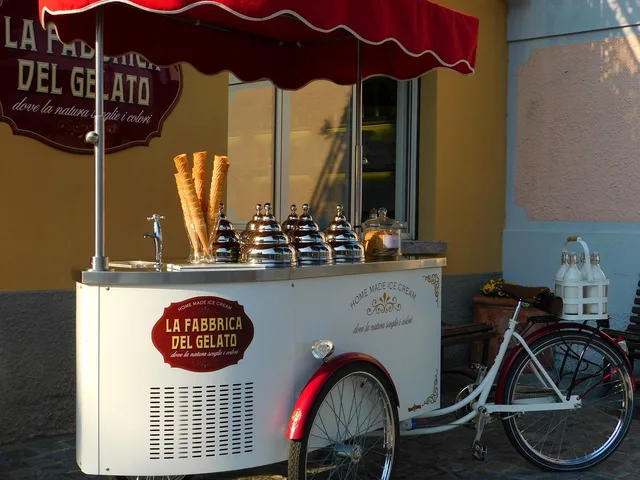
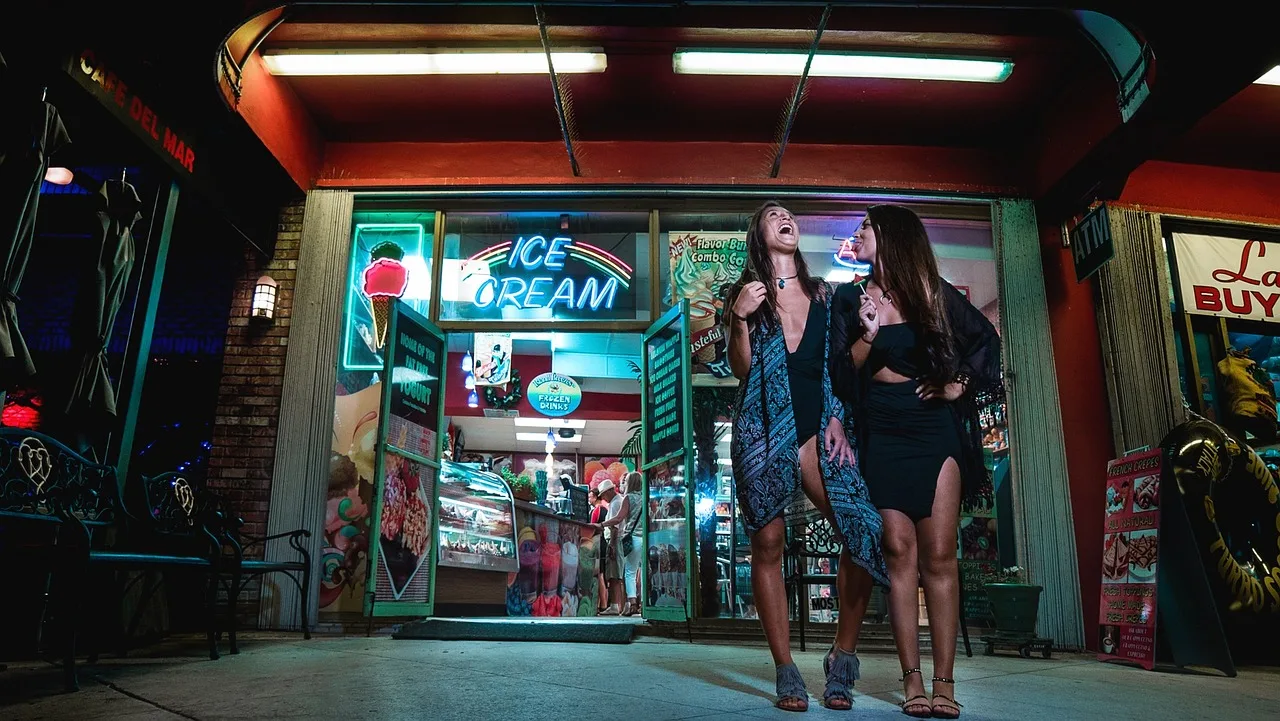
Stand across the road at eight in the evening in July and look at your own shop. Then do it at two on a cold Tuesday. Ask whether a passerby can tell the shop is open, whether the menu is readable from the sidewalk, and whether the entrance and product display are visible. Would the storefront still look welcoming in cold weather?
Shopfront Evening Audit
- Obvious we are open?
- Product visible, not hidden?
- Board readable from decision point?
- Queue inviting, not impassable?
- Anywhere to stand or sit?
- Anything visible look tired?
Every one of those is cheaper to fix than an advertising campaign and does more.
The counter is a marketing channel
A server who can answer "what should I try?" with a real sentence sells more than any post. A server who says "they are all good" sends the customer to the safest flavor and teaches them nothing about you.
That capability is bought with training, not with enthusiasm. Give the counter team a flavor briefing that covers ingredients, texture, and flavor profile, then have staff practice a one-sentence recommendation for each flavor. Product knowledge belongs in counter training, not just in a marketing plan.
What you may say
Everything on a board, a label, a listing or a post is advertising. The Federal Trade Commission: Advertising FAQs: A Guide for Small Business says a claim must be truthful and backed by evidence you already hold.
Three claims come up constantly in this trade, each checkable: made here, local dairy, and no artificial anything. If you cannot show it, do not print it.
Reviews are their own subject. Asking customers for honest reviews is ordinary practice. Paying for reviews, offering something in exchange for a positive one, or writing them yourself is not.
The U.S. Federal Trade Commission: Soliciting and Paying for Online Reviews: A Guide for Marketers explains where the line sits and what has to be disclosed when an incentive is involved.
For product names and packaged-label requirements, check the U.S. Food and Drug Administration's (FDA) standards of identity for ice cream and food-labeling rules, as well as your state dairy regulator and local health department for applicable permits. Settle those requirements before writing copy.
Growth options for a seasonal shop
Growth here means one of four things: more people through the door in season, a bigger average sale, a winter line, or another outlet. These four are not equally available.
The first is capped by your peak capacity and your street. The second is capped by your board's ladder and counter training, both of which connect to what a price has to clear across the year.
The third is the one most shops under-invest in, and it is the one that changes the annual arithmetic most, because it earns in the months that currently cost you money.
Measuring without fooling yourself
Ask every new customer how they heard about you, for one week each season, and write down the answers. It is unscientific and it is still better than any dashboard, because it catches the answers nobody tracks: walked past, a friend, saw the sign, my kid wanted to.
Track the seasonal flavor's first week, the pint count by month, and the number of orders taken for collection. Those three tell you whether the parts of marketing that matter are working.
Common questions
How much should I spend on marketing?
There is no single spend level that fits every shop. Spend less on promotion during peak periods and put more effort into the shoulder months; fix the front, the listing, and the counter first. Those take work before they take campaign budget, and they are where the returns are.
Do I need to post every day?
No. Post when there is something real: a new flavor, a change of hours, a picture of what is in the case today. An accurate listing beats a busy feed.
Should I run a discount to get people in?
Work out how many extra servings a discount has to produce before you are no worse off, and whether the queue can serve them. To estimate the break-even point, divide the total discounts given by the contribution margin on one additional serving after its variable costs. Most discounts in this trade reward people who were coming anyway.
What about a loyalty card?
They work best in shops with genuine regulars, which means neighborhood sites rather than tourist ones. Decide whether your customers are people who come back this month or people who come back next year; the answer changes whether the card is worth anything.