Guides
Four ways ice cream shop customers arrive and six first visit decisions
A framework for ice cream shop owners covering the four customer arrivals, six first visit decision points, capacity, second visits, reviews, and wholesale.
What to take away
- There are only four ways a new customer arrivesthey walked past, somebody sent them, they searched, or they saw you somewhere else. Each is won differently and three of them are cheap.
- The first visit is where you win or lose the second one, and the second visit is the whole business. Audit the first visit before spending anything on reach.
- Most shops that want more customers have a capacity problem in the peak and a visibility problem in the shoulder months, and treat both as one problem.
- Incentives change what you are allowed to say. Asking for honest feedback is ordinary; paying for praise is not.
The four arrivals
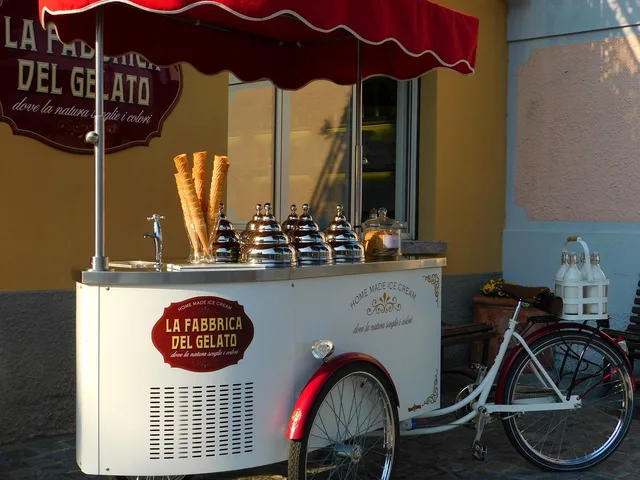
Walked past. The largest source for most shops and the one most neglected. It is won by the front, the lighting, the visible case and the readable board, in the hour when people are actually there.
Four arrivals and how to win them
Arrival
- Walked past
- Front, lighting, visible case
- Sent by someone
- Product and service worth mentioning
- Searched
- Accurate listing, current hours
- Saw you elsewhere
- Stall, event, tub, pint
Won by
- Walked past
- Sent by someone
- Searched
- Saw you elsewhere
Sent by someone. The most valuable, because they arrive already inclined to like you. Won by giving the first person a reason to mention you, which is a product and service matter rather than a promotional one.
Searched. People deciding in the next ten minutes. Won by an accurate listing, current hours, real photographs and being open when you said you would be.
Saw you elsewhere. A market stall, an event, a tub in a restaurant, a pint in a friend's freezer. Slow, and the only one that reaches people who never pass your door.
Rank them for your own shop and spend your effort in that order. A shop on a quiet street cannot rely on the first, and a shop on a busy promenade rarely needs the fourth.
Audit the first visit
Walk in as a stranger, or better, ask someone to do it and tell you the truth. Six decision points:
Six first-visit decision points
- From across the streetopen and obvious?
- At the doorqueue clear and fun?
- At the caselabels legible and correct?
- The greetingacknowledged within seconds?
- The questionreal recommendation with reason?
- The handoverright size, survives the seat?
- From across the street.Is it obvious the shop is open and what it sells? A closed-looking door on a warm evening is the most expensive thing on this list.
- At the door.Is there a queue, and does it look like fun or like a wait? Is it clear where it starts?
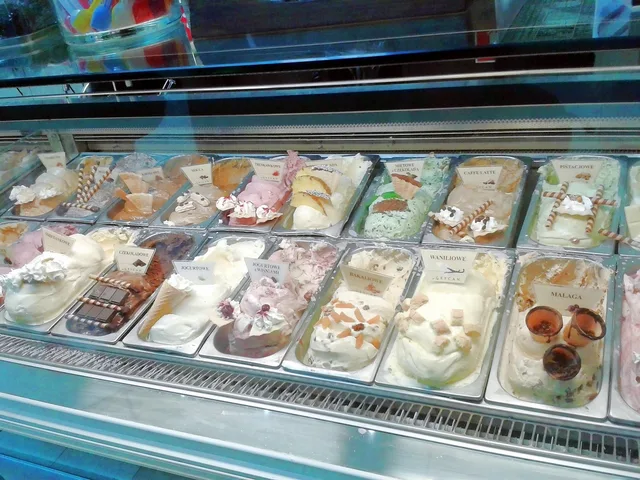
- At the case.Can a first-timer read what is there without asking? Are the labels legible, current and correct, including the dairy-free ones?
- The greeting.Does someone acknowledge them within a few seconds, even if busy? Acknowledgment is not service and it stops people leaving.
- The question.When they ask what to try, what do they get? "They are all lovely" is a wasted opportunity. A real recommendation with a reason is what people repeat later.
- The handover.Is the serving the specified size, in a vessel that will survive to the seat, with a napkin? Do they know they can take a pint home?
Fix them in that order. The earlier ones are cheaper and each of them is upstream of everything you might otherwise spend money on.
Being findable at the moment of decision
Somebody standing in the street decides in about a minute. Your listing is what they see: hours, photographs, location, and whether the shop looks alive.
Listing check at decision moment
- Hours current, including seasonal changes
- Photographs real and recent
- Location accurate
- Shop looks alive
The Google Business Profile Help: Tips to improve your local ranking on Google page sets out what Google says affects local ranking and what an owner controls.
The seasonal trap is hours. A shop that shortens hours in September and forgets to update them is turning people away for months and never learns about it. Put a hours check into the seasonal routine.
Capacity is a customer problem
More people wanting to buy is only useful if you can serve them. On a hot Saturday the constraint is the queue, and the queue is decided by staffing, the layout of the counter and how long each sale takes. A sundae assembled at the peak costs the servings of the three people behind that customer.
Peak capacity constrains growth
- More people want to buy
- Queue is the constraint
- Staffing, counter layout, sale time
- Sundae at peak costs three servings
- Growth from shoulder hours and quiet months
If your peak is already full, growth has to come from the shoulder hours and the quiet months rather than from more people at once. Deciding which of those to chase is part of the growth choices open to a shop.
The second visit
Everything above brings someone in once. What brings them back is narrower: the product was better than the alternative, the serving was what they expected, and something happened that they can describe to someone else.
First visit versus second visit
First visit
- Won by
- Novelty
- Product
- Better than alternative
- Serving
- What they expected
- Memory
- Something to describe
Second visit
- Won by
- Reliability
- Product
- Same serving size
- Serving
- Consistent
- Memory
- Same welcome
Two practical things that produce a second visit:
- A reason to return that is dated.A seasonal flavor arriving next week, an order collected on Friday, a cake for a birthday. Dates bring people back; general goodwill does not.
- Consistency.The same serving size, the same flavor, the same welcome. First visits are won by novelty and second visits are won by reliability, and reliability at a counter is a product of what the crew was trained to do.
Asking for reviews and referrals without crossing a line
Ask happy customers to leave an honest review. Do not offer anything for a positive one, do not write reviews yourself, and do not filter who you ask by how happy they look if you offer an incentive.
Review solicitation rules
- Ask happy customers for honest review
- Do not offer anything for positive review
- Do not write reviews yourself
- Do not filter who you ask if incentivizing
- Disclose anything of value exchanged
The U.S. Federal Trade Commission: Soliciting and Paying for Online Reviews: A Guide for Marketers explains how reviews may and may not be solicited, and what must be disclosed when anything of value changes hands.
The same caution applies to anything you say to draw people in. Claims about your ingredients or your process are advertising, and some product descriptions are also governed by what your permit allows you to call the product, which belongs with the licensing questions this trade raises.
The customers who are not people
Restaurants, cafes, offices and event organizers buy differently and buy in the months your counter is quiet. Winning them is a matter of samples, reliability and terms rather than of anything on a shopfront, and it belongs with the decision to trade beyond the counter.
One wholesale customer can be worth more in February than a busy Saturday in July is worth in August, because it earns when nothing else does.
What not to do
- Do not discount into a queue. You are paying people who had already decided.
- Do not chase reach while the front looks closed and the listing says the wrong hours.
- Do not add menu lines to attract new customers if the lines slow the peak. The arithmetic of what each line has to clear sits in what a price has to cover across the year.
- Do not measure by follows or impressions. Measure by people at the counter who say they came because of a specific thing.
Common questions
How do I know which of the four arrivals I have?
Ask. For one week each season, ask every customer you serve how they heard about you and write it down. A week of answers will change what you do next.
Is a grand opening worth it?
A soft opening is worth more. Get the machines, the queue and the crew working first, then invite people. An opening event on an untested system is a large number of first visits spent badly.
What is the fastest thing I can change?
The hours on your listing and the way the front reads from across the street. Both can be done this week and both are upstream of everything else here.
Do loyalty schemes bring new customers?
No, they reward existing ones. They can be worth running for that reason, but they are not an answer to the question this page is about.