Guides
Ice cream shop site selection for owners
Ice cream shop site selection and location guide built on one test: who walks past at 8pm on a hot Saturday in July, and whether the space carries the freezer.
What to take away
- The location decision for an ice cream shop is a question about one hour of the week: the warm weekend evening. A site that is busy at lunch on a weekday and dead at 8pm in July is a sandwich shop location.
- The second question is what happens in February, and the cold-month count is the answer.
- The space itself has to carry the equipment: power for the batch freezer and the cases, drainage, ventilation, and somewhere for condensers to reject heat. A perfect corner with a bad electrical supply is not a perfect corner.
- Count it yourself. No demographic report, no landlord's footfall figure and no map tool tells you who is on that pavement at that hour.
The decision, stated plainly
You are choosing the place where the summer will pay for the winter. Everything else about site selection is detail. A national answer cannot exist.
The two things that decide it, the length of the warm season and the cost of the space through the cold one, are local facts, and the pavement at 8pm looks different on every street.
Define the terms at the right scale
Three words carry this page and are used precisely.
Catchment is where the people on the pavement came from. Residents walking after dinner, tourists between attractions, families leaving a park, workers leaving an office: each is a different catchment with a different hour of peak and a different season.
Capture is the share of people passing who come in. It depends on visibility, the queue being visible from the street, the door being on the right side, and whether there is somewhere to stand and eat. You cannot measure capture until you open, but you can see the things that raise it.
Carry is whether the physical space can hold the operation: power, water, drainage, ventilation, heat rejection, floor loading for a walk-in, a delivery route for dairy, and whatever the health department requires of the fit-out.
Assess what you already have
If you already control a space, start by testing it against the three terms rather than assuming it must work. If you are searching, write down the catchment you want before you look. A beach site and a residential-street site are different businesses, and the product mix you intend to sell should already tell you which one you are.
The site types compared
Peak hour
- Tourist or beachfront strip
- Afternoon and evening, warm days
- Main street of a town
- Weekend evenings, warm months
- Residential neighborhood corner
- After dinner, every warm evening
- Next to a park or waterfront
- Warm afternoons and weekends
- Business district
- Weekday afternoons
- Shopping mall
- Mall hours, weather-independent
- Drive-to destination
- Weekend days
- Near a school or campus
- Afternoons in term
Season shape
- Tourist or beachfront strip
- Extreme: all summer, nothing after
- Main street of a town
- Strong summer, thin but real winter
- Residential neighborhood corner
- Summer heavy, but pints sell in winter
- Next to a park or waterfront
- Weather-bound
- Business district
- Weak in summer, when offices empty; dead at weekends
- Shopping mall
- Flat, with holiday peaks
- Drive-to destination
- Depends on the destination's season
- Near a school or campus
- Wrong way round: dead in the summer break
Catchment
- Tourist or beachfront strip
- Visitors, once
- Main street of a town
- Residents and visitors
- Residential neighborhood corner
- Residents, repeatedly
- Next to a park or waterfront
- Families, dog walkers, runners
- Business district
- Workers
- Shopping mall
- Shoppers
- Drive-to destination
- Day-trippers
- Near a school or campus
- Students
The question that decides it
- Tourist or beachfront strip
- Can the rent be carried through the months with no visitors?
- Main street of a town
- Is there evening life after the shops close?
- Residential neighborhood corner
- Do families walk here, or drive everywhere?
- Next to a park or waterfront
- Does the park have life after work, or only at weekends?
- Business district
- Is there anyone here on a Saturday at all?
- Shopping mall
- What does the mall lease actually require, and what hours does it impose?
- Drive-to destination
- What happens when the attraction closes for the season?
- Near a school or campus
- Can you survive July with the campus empty?
The table has no ratings because no row is good or bad in itself. The last column is the point: one question per type, answered by standing there.
Site Types Compared
Site type
- Tourist or beachfront strip
- Afternoon and evening
- Main street of a town
- Weekend evenings
- Residential neighborhood corner
- After dinner
- Next to a park or waterfront
- Warm afternoons
- Business district
- Weekday afternoons
- Shopping mall
- Mall hours
Peak hour
- Tourist or beachfront strip
- Extreme: all summer
- Main street of a town
- Strong summer, thin winter
- Residential neighborhood corner
- Summer heavy, pints winter
- Next to a park or waterfront
- Weather-bound
- Business district
- Weak summer, dead weekends
- Shopping mall
- Flat, holiday peaks
Season shape
- Tourist or beachfront strip
- Carry rent in winter?
- Main street of a town
- Evening life after shops close?
- Residential neighborhood corner
- Families walk here?
- Next to a park or waterfront
- Park life after work?
- Business district
- Anyone here Saturday?
- Shopping mall
- Lease requirements and hours?
Deciding question
- Tourist or beachfront strip
- Main street of a town
- Residential neighborhood corner
- Next to a park or waterfront
- Business district
- Shopping mall
Set goals that can be measured
Before visiting a single candidate, write down:
- The evening count you need on a warm weekend to make the summer pay, derived from your serving price and your fixed cost.
- The lowest winter count you could survive, derived from your winter reserve.
- The electrical load your equipment list needs, in writing from the supplier.
- The number of pans in the case, because it sets the counter length and the case footprint.
The count follows from arithmetic. If 10 people in 100 who pass the door buy, and you need 200 servings in that hour, you need 2,000 passers in that hour. Use your own capture assumption and write it down, because you can only test it after you open.
A candidate is then measured, not judged.
Count the shortlist yourself
A tally counter and a notebook beat any report. Budget about four hours per candidate and spend them at the door.
The warm evening count.
- Pick a warm weekend evening. Arrive an hour before the hour you expect the shop to be busiest and stay for two hours.
- Stand where the door would be. Tally every person passing on foot on your side of the street, and tally the other side separately.
- Note who they arecouples, families with children, groups of teenagers, dog walkers, tourists with bags. Note whether they stroll or walk with purpose.
- Note what else is open and lit. A street where everything closes at six has no evening.
- Write down the date, the temperature and the weather. A count on a cool evening undercounts.
The cold count. Repeat the same spot and the same method at midday on a cold weekday, and if you can, at 8pm on a cold weekend evening as well. The cold evening number is the one that tells you whether pints and cakes have anyone to sell to.
The ratio. Divide the warm evening count by the cold count. The result is the site's season ratio. A high ratio means the site lives on summer and needs a reserve to carry it through winter, which may mean events, wholesale or closing. A low ratio means a steadier but smaller business. Neither is wrong by itself.
Put the survivors on one sheet and fill it in after each visit:
| Candidate | Warm evening count | Cold count | Ratio | Building work | Authority's list | Rent |
|---|---|---|---|---|---|---|
| A | ||||||
| B | ||||||
| C |
Understand the constraints
The season. Count each candidate twice: a warm weekend evening, and a cold weekday midday. The ratio between the two is the season problem for that site in one number. It does not disqualify a site, but it sizes the reserve you need.
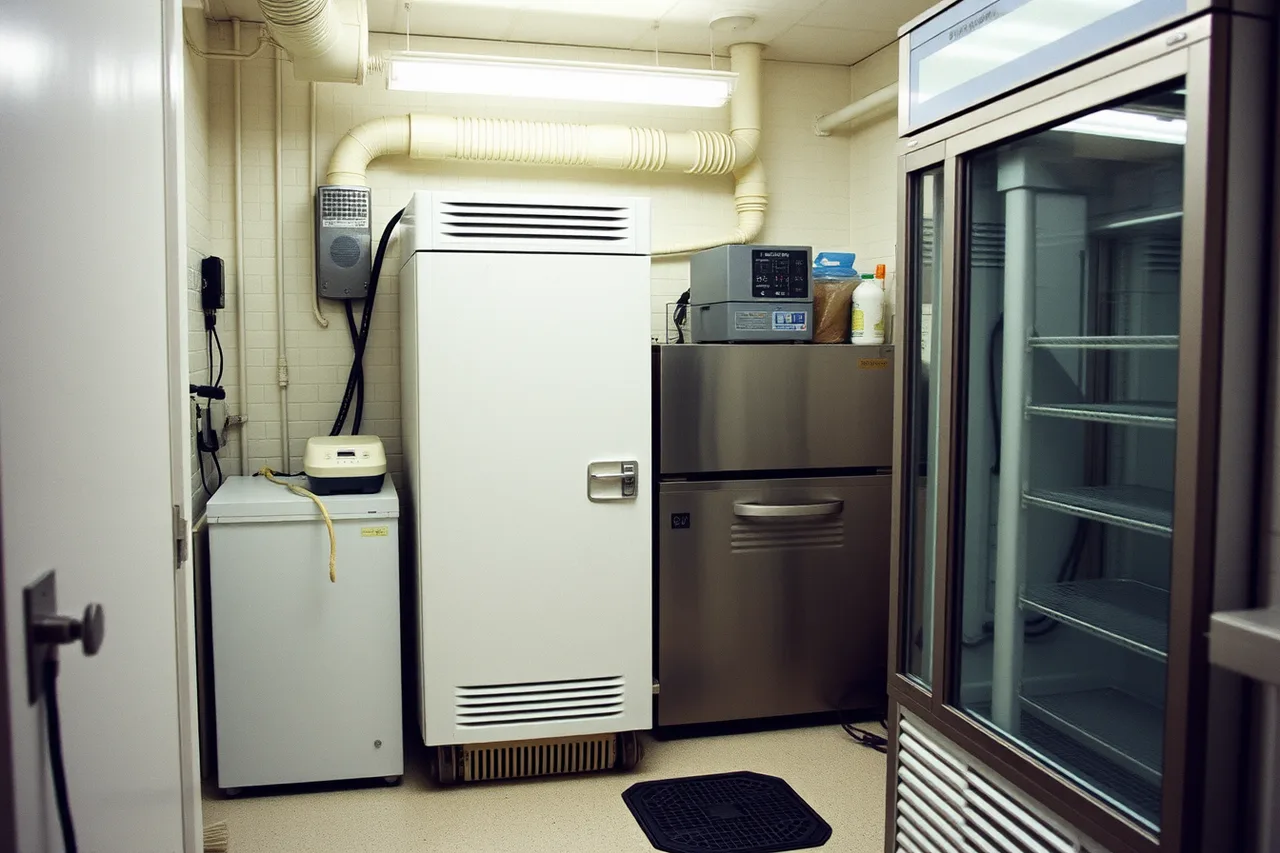
The building. Batch freezers, hardening cabinets and display cases draw serious power and reject serious heat. Ask where condensers will go and whether the landlord permits them there. Ask what the supply to the unit is and what it would cost to upgrade. Ask where a walk-in would stand and whether the floor takes it.
Ask how dairy is delivered and where waste goes. Ask who pays for the supply upgrade, where grease goes, and where a summer team changes and stores belongings. A space that fails any of these is a space that cannot carry the business, however good the pavement.
Power and build-out costs vary widely, so treat the figures as typical: $3,000 to $15,000 for a service upgrade and $50,000 to $200,000 to fit out an empty shell. Get a written quote before you compare candidates.
Add up the nameplate kilowatts of every machine on your equipment list and give the total to an electrician. A small retail unit may carry it, or it may not.
The authority. The local health department will have requirements for the fit-out, and which body that is depends on the state; the U.S. Food and Drug Administration: State Retail and Food Service Codes and Regulations directory names it.
Get their list for the specific space before the lease binds you. What they ask for becomes a cost line in the comparison between candidates. The licensing questions that surround this are worth reading alongside.
Accessibility. The U.S. Department of Justice: ADA Guide for Small Businesses explains what federal accessibility law asks of a small business in an existing building.
A single step at the door, a counter too high to reach from a wheelchair, a restroom that cannot be entered. Each is a question the guide addresses in terms of what is readily achievable, and each is far cheaper to settle before the fit-out.
Choose an approach
There are two honest strategies, and they do not mix well.
Peak Maximizer vs Year-Round Builder
Strategy
- Peak maximizer
- Tourist strip or waterfront
- Year-round builder
- Neighborhood or main street
Site it wants
- Peak maximizer
- Any winter trade
- Year-round builder
- Peak revenue
What it sacrifices
- Peak maximizer
- Operator with reserve to close
- Year-round builder
- Operator open all year
Who it suits
- Peak maximizer
- Year-round builder
The peak maximizer wants the highest count of the year and the shortest season. The site is a tourist strip, a beachfront, or a corner that fills on warm weekends. The plan is to open hard for four or five months and cover the whole year's rent. The risk is a cold July.
The year-round builder wants a base that keeps coming back. The site is a main street, a residential corner, or a street near a school or campus. Pints, tubs, delivery and holidays carry the thin months, and the summer peak matters less. The risk is a summer too small to carry the rest of the year.
Site it looks for
- Peak maximizer
- Tourist strip, beachfront, park corner
- Year-round builder
- Main street, residential corner, campus street
Peak
- Peak maximizer
- Warm afternoons and evenings
- Year-round builder
- Weekend evenings in summer, after dinner all year
Thin months
- Peak maximizer
- Closed or short hours
- Year-round builder
- Pints, tubs, delivery, holidays
Main risk
- Peak maximizer
- A cold season and rent that runs all year
- Year-round builder
- A summer too small to carry the year
Pick one before you view anything. Most disappointing sites are peak-maximizer locations taken by year-round builders who then discover February.
Plan the search in phases
- Decide the strategy and the catchment.
- Shortlist by walking, not by listings. Note where people are at 8pm on a warm evening.
- Count the shortlist with a tally sheet, at the same hour on three days.
- Test each surviving candidate for carrypower, drainage, ventilation, heat rejection, deliveries, floor.
- Take the plan to the health department and get their list.
- Only then negotiate the lease, with the fit-out list in hand.
The general market research and planning steps in the U.S. Small Business Administration: SBA Business Guide apply to the desk part of this work; the pavement part is yours.
Budget beyond the rent
Rent is the number on the listing. The site's true cost adds the electrical upgrade, the condenser installation, the health department's fit-out list, the months of rent before opening, and the winter reserve the site's season ratio implies. Two sites with the same rent can differ enormously on the rest.
A common food service rule of thumb puts rent at 6 to 10 percent of sales, measured over a year. Treat that as a typical range, not a rule. A seasonal shop often runs above it in the peak months and leans on the reserve in the rest.
Decide what to hand to a professional
A refrigeration contractor should see the space before you commit, for the electrical load and the heat rejection. A lawyer should read the lease clause about who pays for work the health department requires. The counting is yours.
The clauses worth a lawyer's reading, at minimum:
- Term. How long the lease runs, and what renewal or exit looks like at the end.
- Exclusivity. A clause that stops the landlord from signing another ice cream tenant in the same center.
- Fit-out responsibility. Who pays for the health department's list, the electrical upgrade and the condensers, and who owns that work when the term ends.
- Permitted use and hours. Whether the lease obliges you to open at hours that do not suit ice cream.
Live with the result
A site is a decision you live with for the whole lease, through every winter in it. Running the shop there is a job of evenings, weekends and holidays, which is how the U.S. Bureau of Labor Statistics: Food Service Managers profile describes food service management.
The site that makes those hours pay is the one where the count at 8pm on a hot Saturday was real.
The wider startup framework puts this decision in its sequence: after the product, before the equipment order, and long before the lease.
Common questions
Is a tourist location always better?
It has the higher peak and the worse winter. Whether that is better depends on whether you can afford the winter, which is a question about your reserve, not about the site.
How do I count a site properly?
Stand at the door with a tally sheet or a hand clicker and count people passing on foot for one hour on a warm weekend evening. Do the same time-of-day sample on three different days, because one evening can be a street festival and the next a washout.
Repeat at midday on a cold weekday, and again at 8pm on a winter evening. Record the date, the weather and the temperature beside each count. The method is set out in full in the site-choosing article on this site.
What if the perfect corner has a weak electrical supply?
Get a written quote for the upgrade and add it to the site's cost. If the landlord will not permit the work, the corner is not perfect.