Guides
How to start an ice cream shop: who to ask at each stage
How to start an ice cream shop by asking the right party at each stage: your own test batch, the street, the supplier, the health department, then the state.
What to take away
- Each stage has one party who holds the answeryou, the street, the equipment supplier, the health department, the tax and licensing offices, your team.
- Ask in order, because each answer sets the constraints for the next.
- Start with the product at full batch size, not with the shopfront.
- Get the health department's requirements before the lease binds you.
Why the order of questions matters
Expensive mistakes in this trade are usually a good decision made at the wrong time. A lease signed before the equipment load was known, a batch freezer bought before the recipe was proven, and staff hired before the hours were set.
So each stage below names who holds the answer, what to ask for, and what the answer unlocks. The sequence assumes you intend to make product on site.
If you plan to dip bought tubs, skip stage one and most of stage three, and read the wider shape of the business before deciding. A dipping shop is a retail play with thinner margins and a harder winter.
| Stage | Ask | What to ask for | What it unlocks |
|---|---|---|---|
| 1. Product | Yourself, at volume | A batch that survives day three | Recipes worth costing |
| 2. Site | Passers-by and neighbors | A warm-evening count and a cold-midday count | A shortlist of sites |
| 3. Equipment | The supplier | Output per cycle, and the electrical load in writing | A load to hand to the landlord |
| 4. Lease | The health department and the planning office | Requirements for the space, and zoning | A lease you can sign |
| 5. Paperwork | State, federal and local offices | Registration, tax IDs and permits | A legal first sale |
| 6. Opening | Your team | Two weeks of rehearsal | A soft open |
Stage one: ask yourself, at volume
Ask the product first, and ask it at volume. Recipes change when they scale, and you want to find that out before there is rent to pay.
Prove the product at volume
- Make every flavor you intend to open with at full batch size, on the type of machine you intend to buy. A domestic machine tells you nothing about a commercial batch freezer.
- Hold each batch at serving temperature for a full day and at storage temperature for a week. Taste on day one, day three and day seven. Ice crystals, weeping, and flavor fade show up in storage, not in the fresh batch.
- Weigh a fixed volume of each finished flavor and compare it with the weight of the same volume of mix. That comparison is your overrun. Write it down per flavor; it will not be the same for chocolate as for lemon, and it decides serving cost.
- Cost each flavor from the dairy invoice, per finished serving, using the overrun you measured. A flavor that costs twice what the others cost needs to either sell at a premium or leave the menu.
Do not go past this stage with a recipe that fails day three.
Prove the product at volume
- Make full batches on commercial machine
- Hold and taste day one, three, seven
- Weigh finished flavor against mix for overrun
- Cost each flavor per finished serving
Stage two: ask the street
Ask the street two questions: who walks past on a warm evening, and who walks past on a cold midday. For this sequence, the minimum is:
Count the site
- Stand at the door of each candidate on a warm weekend evening and count the people passing for an hour. Repeat at midday on a cold weekday.
- Note where those people came from and where they are going. Evening strollers with nowhere particular to be are ice cream customers. Commuters are not.
- Ask the neighboring businesses what the quietest month is like. They will tell you.
Site selection has its own long treatment elsewhere on this site. The ratio of the warm evening count to the cold midday count is the size of your season problem at that site. A high ratio is not a reason to reject the site, but it is a reason to size the winter reserve accordingly.
Stage three: ask the supplier, working from the peak hour
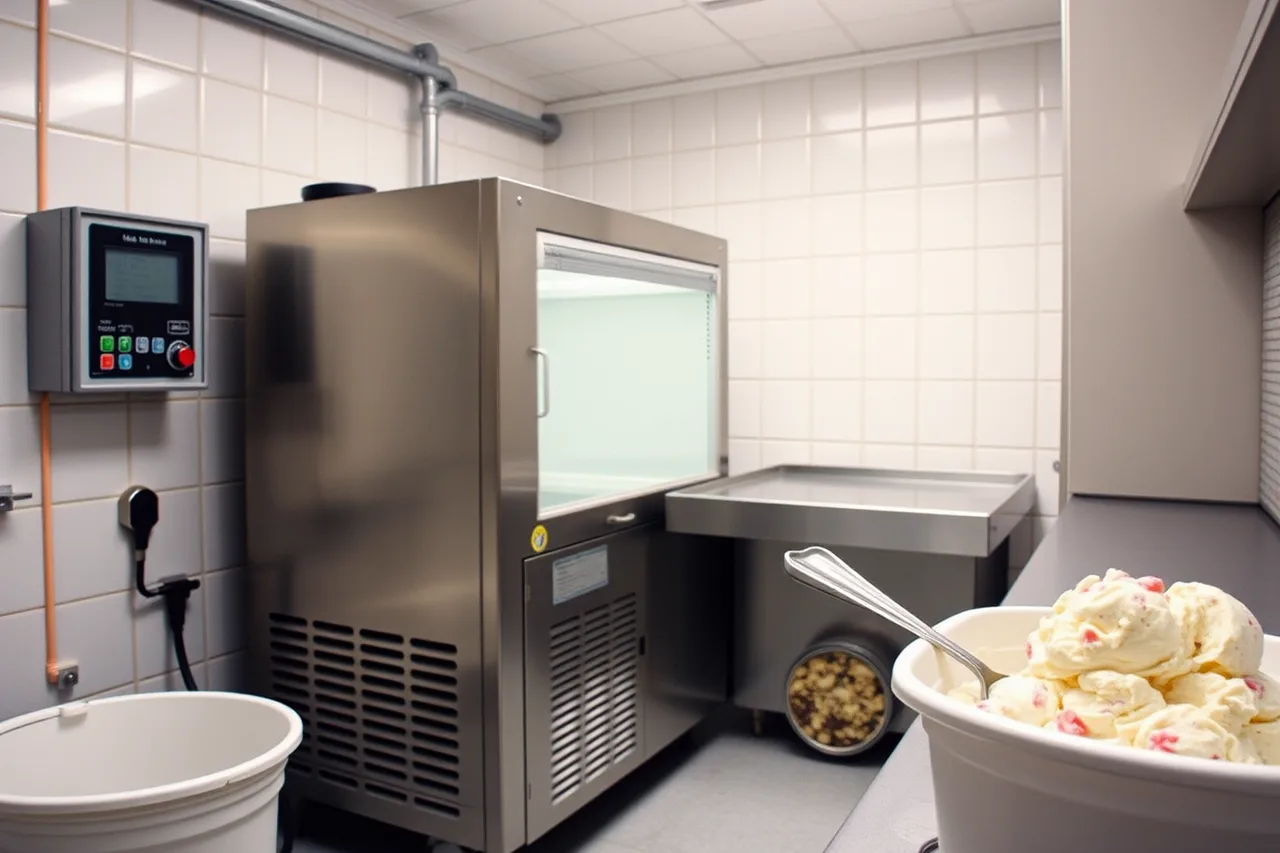
Work from the peak hour backward, and ask the supplier what one machine makes in an hour.
Size equipment from the peak hour
- Count site traffic for peak servings
- Divide peak servings by one machine's hourly output
- Check display case pan count against flavors
- Get written electrical load from supplier
- Estimate servings per hour in the peak from your site count and a realistic capture rate you can defend.
- A batch freezer produces a fixed quantity per cycle, and cycles take a fixed time. Divide the peak hour's servings by what one machine makes in an hour. That is how many machines or how much hardening stock you need on a Saturday in July.
- The display case is the second constraintthe number of pans caps the number of flavors, and each pan is inventory that is losing quality from the moment it is filled.
Then ask the supplier for the electrical load of everything together, in writing, because it is the first thing to hand to a landlord.
Stage four: ask the health department and the planning office before the landlord
Before signing, ask the local health department what they will require of the specific space. Which agency regulates retail food varies by state.
The U.S. Food and Drug Administration: State Retail and Food Service Codes and Regulations directory names the body for each state and links to the code it applies.
Most state and county retail food codes are versions of the FDA Food Code, so the categories the inspector asks about repeat from one jurisdiction to the next.
Inspector's list before the lease
- Floors
- Sinks
- Grease
- Ventilation
- Pasteurization process if used
Get the requirements for floors, sinks, grease, ventilation and, if you pasteurize, the process itself, before the lease binds you. A landlord who will not wait for that answer is telling you something.
Check zoning in the same week. The SBA advises that if you buy, rent, build or plan to work out of a physical property, you make sure it conforms to local zoning requirements.
Zoning laws are typically controlled at the local level, so the department of city planning, or a similar office, is the place to ask.
Outside the United States, the equivalent is the municipal or national food authority, and the same rule holds: their list before your signature.
Stage five: ask the state, the IRS and the licensing office
This stage is the same as for any small business. The U.S. Small Business Administration: SBA Business Guide takes the reader from market research through funding, registration and launch.
For the tax side, the Internal Revenue Service: Starting a business page covers choosing a structure, obtaining an employer identification number and setting up records. Do both before the first sale; retrofitting records onto a summer of cash sales is miserable.
In order, the paperwork runs like this:
- Choose a business structure, because you need it before you register the business with the state.
- Register the business with the state. If you trade under a name other than your own, some counties and cities also require you to register that trade name, the DBA.
- Get the Employer Identification Number, your federal tax ID. You need it to pay federal taxes, hire employees, open a bank account and apply for business licenses and permits, and it is free to apply.
- Check with your state's Department of Revenue whether you need a state tax ID number to pay state taxes, which is where sales tax on scoops and pints is handled.
- Apply for licenses and permits. The SBA's guide to licenses and permits notes that the licenses and permits you need from the state, county or city depend on your business activities and location, and that the fees vary too. For an ice cream shop that means, at minimum, the food establishment permit from the agency found in stage four and any general business license your city or county issues.
This is also where the scoop and cup pricing arithmetic gets settled, because you now know the serving cost from stage one and the rent from stage four.
Stage six: ask your team, with a rehearsal
Hire for the hours you will actually run, which in the first season should be shorter than you would like. Train on the machines before customers arrive, and treat the first two weeks as a rehearsal.
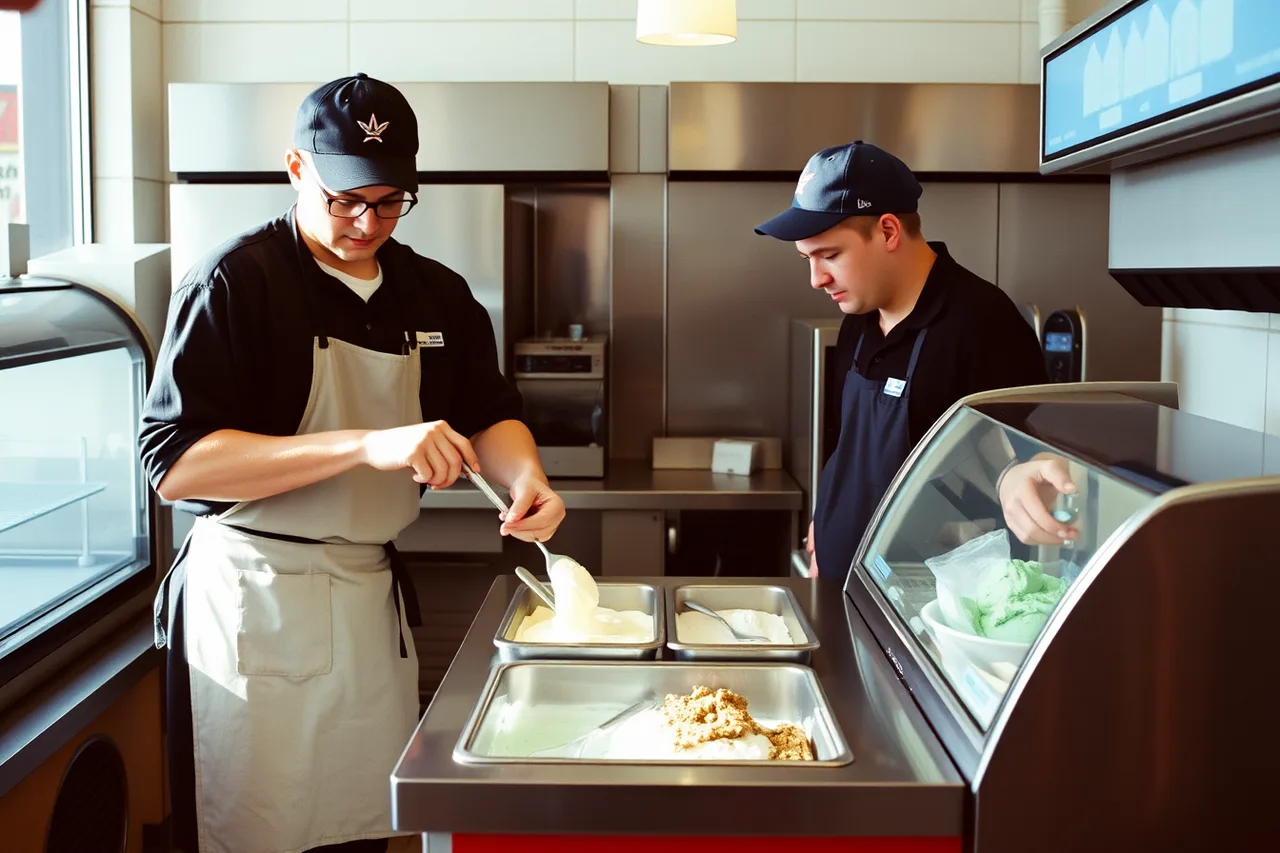
The hiring and training sequence for a counter team is separate. The rule here: do not make your first busy Saturday your first systems test.
Once the machines, the case, the till and the cleaning routine have run for a fortnight without incident, start telling people. How to do that without wasting money is the subject of the customer acquisition guide.
When the jurisdiction changes the answer
The sequence holds everywhere, but the specifics do not. Every jurisdiction has a body licensing food premises, a body governing whether a product may be labeled as it is, and dairy handling rules.
In the United States the dairy side is the Grade "A" Pasteurized Milk Ordinance as the state has adopted it, which matters if you pasteurize your own mix. Which bodies apply and what they require of a specific address is still a local fact you look up, so the licensing questions to ask are framed as questions for exactly that reason.
Common questions
How long does the whole sequence take?
Long enough to run stage one properly, which cannot be rushed, plus however long your local plan review and permit process takes. Ask the health department for their typical timeline; it varies enormously and it is theirs to give.
Can I skip the batch freezer and buy in product?
Yes, and many shops do. You become a retailer rather than a maker, with lower equipment cost, thinner margin and a less distinctive product. Stages two, four, five and six still apply in full.
What is the most common way this goes wrong?
Signing a lease in stage four before doing stages one to three, and discovering that the recipe does not scale, the site is dead in the evening, or the space cannot carry the electrical load.