
Guides
Ice cream shop referrals: should you reward them?
Should an ice cream shop pay for referrals? Four tests for a bring-a-friend card, what the FTC says about rewarded recommendations, and what to do instead.
What to take away
- A reward changes the recommendation it pays for, and in a scoop shop it rarely earns back the attention it costs at the counter.
- Four tests decide whether a bring-a-friend scheme fitsthe size of the purchase, whether friends arrive together anyway, what a rewarded recommendation means, and whether you can measure it.
- An incentive is not unlawful, but anything of value tied to a recommendation has to be disclosed.
- Incentives work better between businesses than between a shop and its customers.
- Ask customers how they heard about you for one week each season. It is the only honest measurement available.
What a referral scheme asks of a scoop shop
A referral scheme asks a two-minute purchase to carry a reward, a record and an explanation at the counter. A card that gives an existing customer something when they bring a friend sounds efficient, but it adds administration to the moment when the queue is longest.
Nobody refers a shop because it was adequate. Referrals come from something specific enough to say out loud, and in this trade that is usually a flavor, a person behind the counter or a problem handled well. A scheme pays for the sentence instead of producing it.
Four reasons the usual scheme disappoints
A bring-a-friend card tends to fail for four reasons, and each can be tested at your own counter. None of them makes an incentive unlawful. They make it a poor fit for a recommendation given in passing, on a pavement, about a two-minute purchase.
- The purchase is small and impulsive. The administration of the scheme costs more attention than the sale is worth, at the moment when the queue is longest.
- It rewards behavior that was going to happen anyway. Friends arrive together in this trade as a matter of course.
- It changes what the recommendation means. A recommendation made for a reward is a different thing, and if there is an incentive, that has to be disclosed.
- It measures badly. You cannot tell the referred customers from the ones who would have come, so the scheme reports a success it did not cause.
Which arrangements fit and which do not
Not every arrangement that rewards loyalty is a referral scheme, and the verdicts differ. The table sorts five common ones by what they reward, and any reward is a cost to price against the margin math of a scoop.
| Arrangement | What it rewards | Verdict |
|---|---|---|
| Punch card | Repeat visits by the same person | Can be worth running in a neighborhood shop with real regulars |
| Bring-a-friend card | A new customer arriving with an existing one | Poor fit, because friends arrive together anyway |
| Free scoop for a five-star rating | A favorable review | Do not offer it |
| Paid promoter | Posts that mention the shop | Advertising, and it has to be disclosed |
| Business-to-business referral | A restaurant recommending you to another restaurant, or an event organizer booking you again | Where incentives do work |
Those last relationships are worth cultivating deliberately. They are made across a table rather than across a counter, and they belong with the work of trading beyond the counter.
What the FTC says about rewarded recommendations
If anything of value is attached to a recommendation, say so. The FTC's influencer guidance says an endorsement should make a material connection obvious, and a financial relationship such as payment or free products counts as one.
The rules for reviews are stricter in one respect. The FTC's guide to soliciting online reviews says not to ask for reviews only from customers you think will leave positive ones, so choosing who to ask by their likely opinion is itself a problem.
The same guide notes that some platforms prohibit reviews from people who got an incentive, even when the review discloses it. So offer nothing for a favorable outcome, ask everyone at the handover when someone is pleased, and keep the ask small: mention us, or leave an honest review if you have a minute.
What to do instead of a reward
Spend the effort on something specific enough to repeat. A flavor with a real name and a short story is repeatable; a flavor called "chocolate" is not, however good it is. Shops known for a single thing get recommended for it, and people who come for it buy other things.
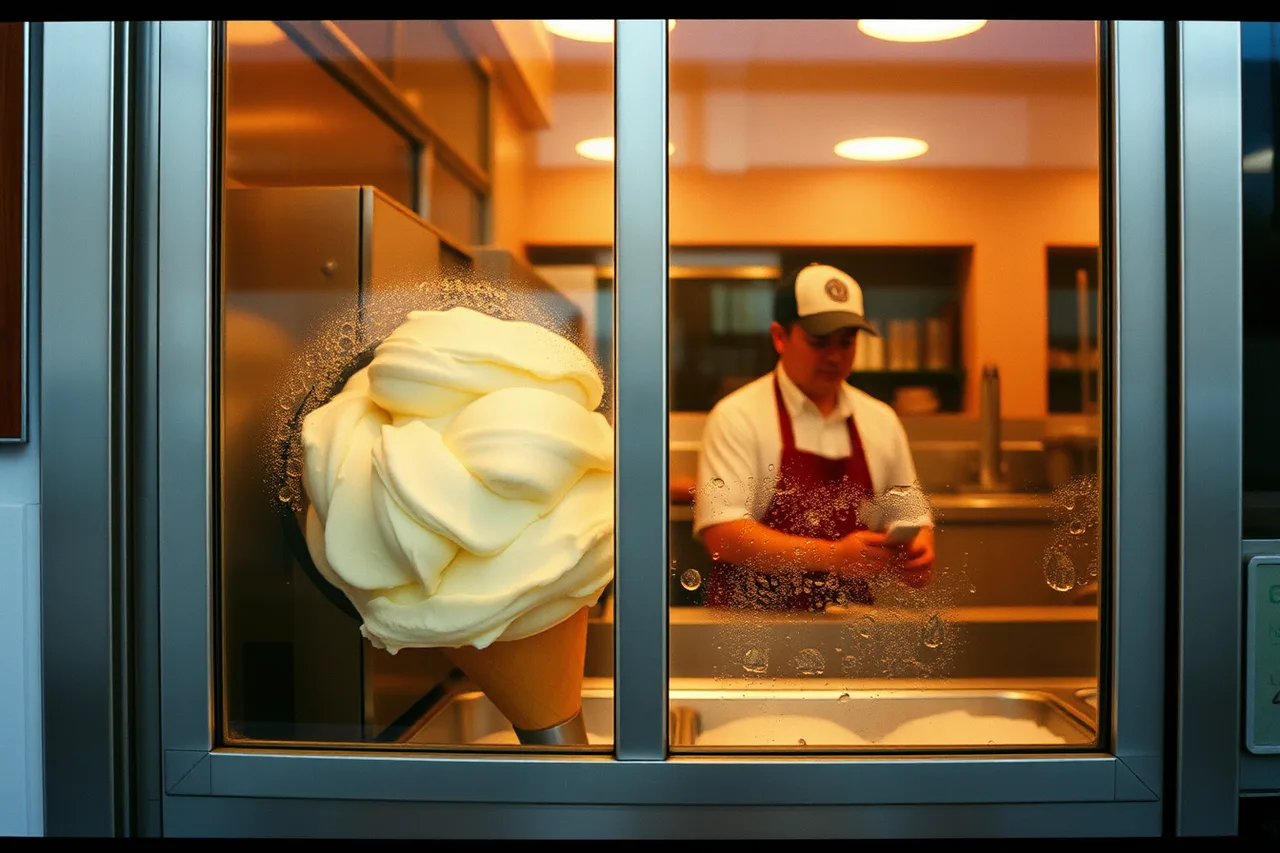
A batch freezer running behind glass produces more conversation than any campaign. It answers "is it really made here" without anyone claiming anything. When a customer asks what to try, the answer is a flavor and a reason, and that is the sentence they repeat, which is why it belongs in what a counter team is taught.
Most referrals with a story attached come from something going wrong and being put right without argument, such as a dropped cone or a wrong order. Set the rule in advance and let the person on shift apply it without calling you. A rule applied instantly is worth several times the same rule applied after a phone call.
Measuring a scheme, or the lack of one
Ask everyone how they heard about you for one week each season and mark the answers on a sheet by the till. It takes a second per customer and is the only data a shop this size will have. Fold the tally into the monthly numbers you track.
Watch three things across seasons: the share who say a friend sent them, the flavors named by first-time visitors, and the number of orders taken for collection. Rising referral share with flat sales usually means your peak is capacity-bound rather than demand-bound, which is a different problem; see how new customers arrive.
The wider mix of where customers come from sits in the seasonal marketing priorities for a shop. Public reviews are the visible form of a referral, and how a local listing works explains where they show up.
What not to do
Do not buy reviews, write your own, or ask staff and family to post them. Do not offer a free scoop for a five-star rating. Do not message customers for reviews unless they agreed to be contacted. Answer a bad review once, plainly, and move on.
Common questions
Is a punch card a referral scheme?
No. It rewards repeat visits by the same person. That can be worth running in a neighborhood shop with real regulars.
Can I offer something to a customer who brings a friend?
You can, subject to the disclosure rules above. Consider first whether it will change anything, given that friends already arrive together, and whether the counter can administer it on a busy evening.
What if somebody asks to be paid to promote us?
Then it is advertising, and it has to be disclosed as such by whoever posts it. Decide whether you want an advertisement, and be clear with yourself that it is not a referral.
How long does it take for word of mouth to build?
Seasons, not weeks, and it compounds. The second summer of a shop that is genuinely good is usually noticeably better than the first, without anything being spent.