Guides
Reading ice cream shops with a sceptical eye
Ice cream shops worth watching, as twenty-five things to observe rather than twenty-five names: what to look at on a visit and what each detail tells you.
What to take away
- No shops are named here. A list of the world's shops to watch would be an opinion about businesses this page has never visited, presented as research, and it would be out of date within a season.
- What is worth having is the observation listtwenty-five things to look at when you walk into any shop, and what each one tells you about how it is run.
- Use it on your competitors, on the best shop you can reach, and on your own premises. The third is the uncomfortable one and the most useful.
- Nothing on the list requires talking to anybody. All of it is visible from the customer side of the counter in about fifteen minutes.
Why there are no names
A ranking would have to be a claim about current quality, current management and current conduct at businesses that change hands, change chefs and change standards constantly. Nothing on this page can verify any of that, and a confident list of names with invented commentary attached is worse than no list.
What travels well is method. A shop that impresses you does so for reasons you can identify, and those reasons are copyable in a way that a name is not.
Take this list on your next trip. The best research in this trade is done standing in other people's shops on warm evenings.
The front, before you go in
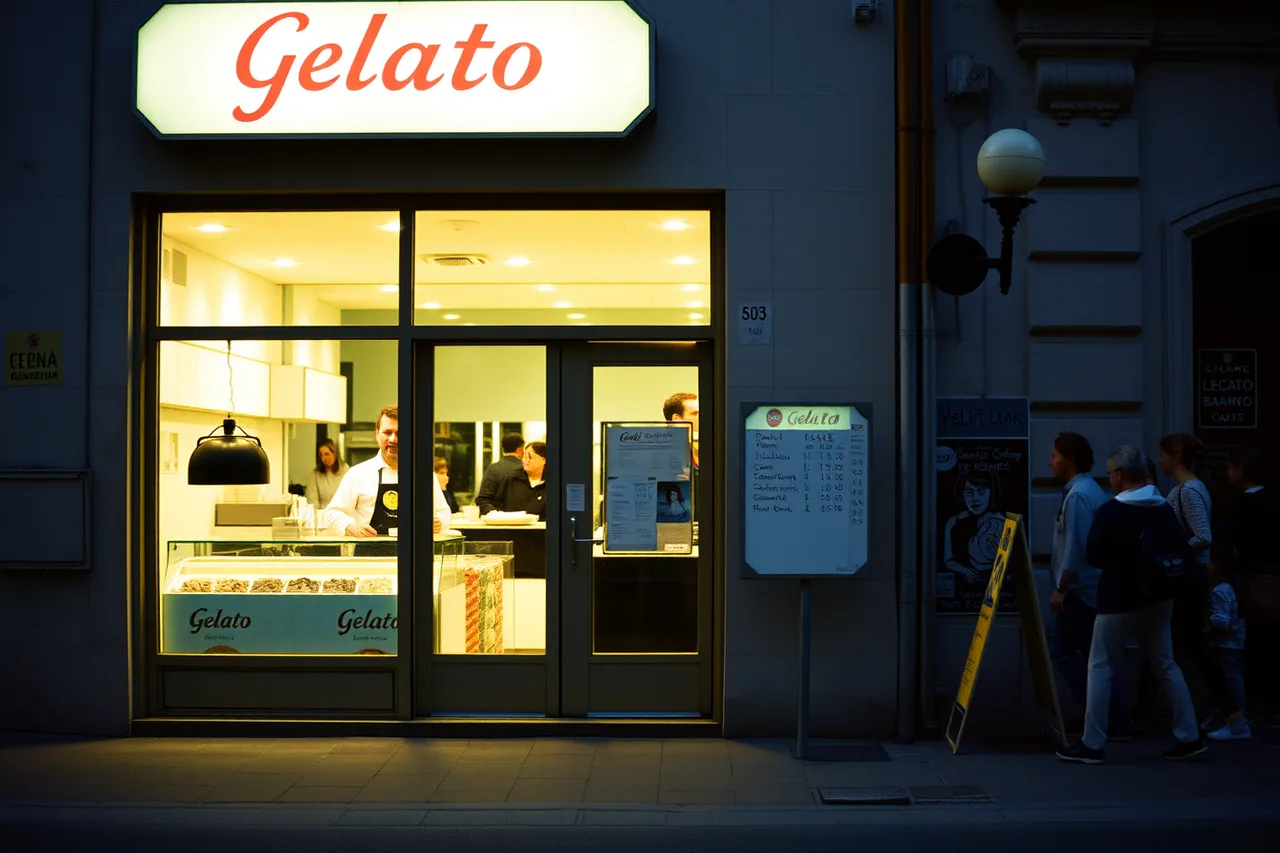
- Is it obvious it is open?Look from where a passerby would decide, not from the door. Lighting, an open door, a visible person.
- Can you see product from outside?A case visible from the street sells before anyone speaks.
- How readable is the board from a distance?Most boards are designed to be read from where staff stand.
- Is there anywhere to be?Seating, a ledge, a step, shade. People stay where they can stand comfortably.
- What is the queue doing?Length, movement, and whether the shop has thought about where it forms.
- How current is everything?A faded poster or last season's flavor list tells you about attention, not about budget.
The case
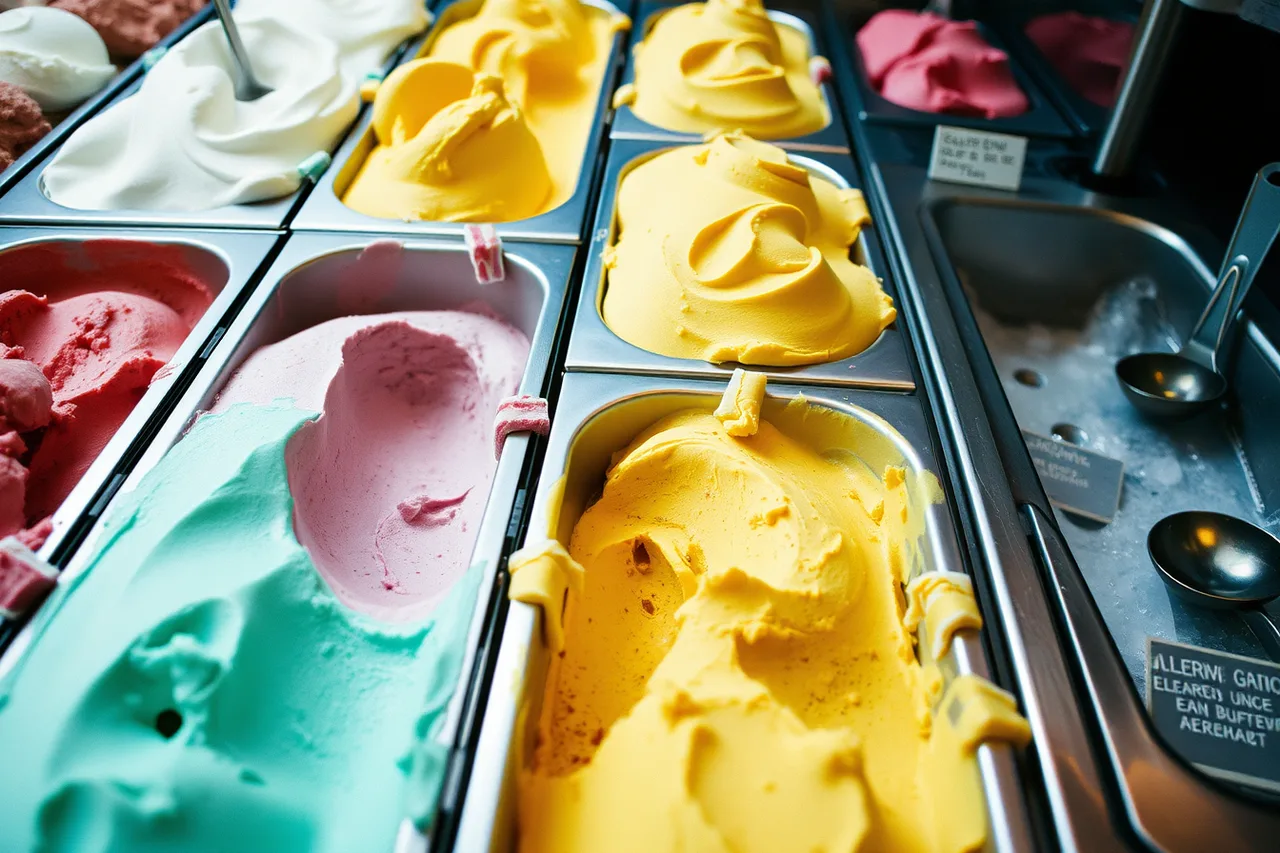
- How many pans, and how full?A case with gaps at eight in the evening means the batch plan is wrong or the day beat them.
- How do the surfaces look?Ice crystals, weeping, a crusted edge, a dug-out crater. Each is a hold-time story.
- Are pans overfilled into decorative mountains?Attractive, and usually a sign of product held too long and reworked.
- Labels: legible, correct, and do they name allergens?This is the fastest read on how seriously the place takes its obligations.
- How are scoops and spades held between servings?Separate wells, water changed, no cross-contact between nut and non-nut pans.
- Is there evidence of making on site?A visible batch freezer, a production window, or nothing at all.
The people
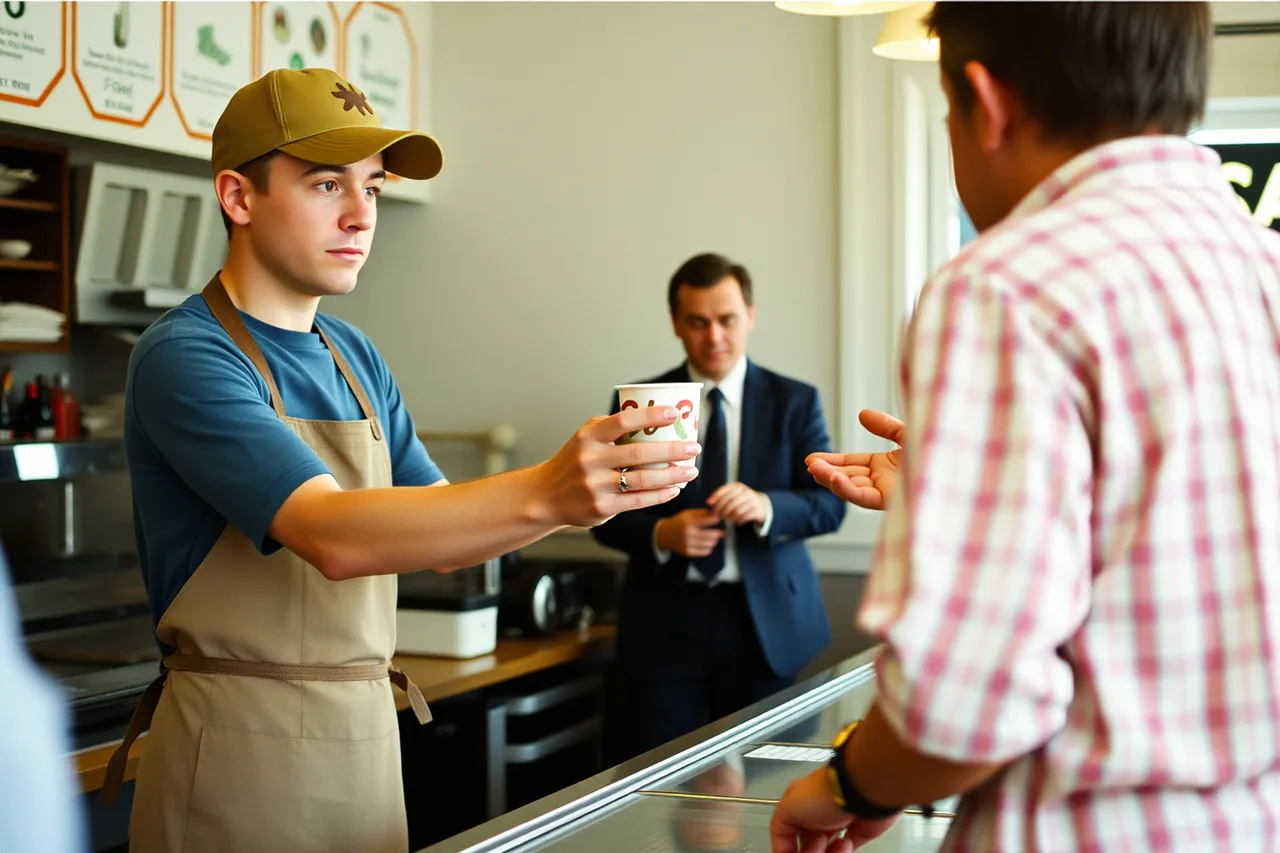
- How long before somebody acknowledges you?Acknowledgment is not service and it is what stops people leaving.
- Ask what to try, and listen to the answer.A flavor with a reason is a trained counter. "They are all good" is not.
- Ask what the difference is between the gelato and the ice cream.The answer, or its absence, tells you what the shop teaches its staff.
- Ask what is dairy-free.Watch whether the answer is confident and whether it mentions shared equipment honestly.
- How consistent is the serving?Watch three customers ahead of you. Size varies more between staff than between shops.
- Who is in charge, and is it obvious?In a well-run shift, someone is clearly responsible and it is visible without asking.
The product

- Temperature at the moment it is handed over.Too hard to eat or already running says something about the case, not the recipe.
- Does the texture hold for the time it takes to eat it?This is where stabilizer, overrun and hold time all show up at once.
- Density in the hand.Weight for the volume is the whole difference between styles, and it is the difference the customer is paying for.
- Does the flavor arrive early or late?Fat and cold mute flavor; a well-balanced product still tastes of something at the first spoon.
The business, visible from the counter
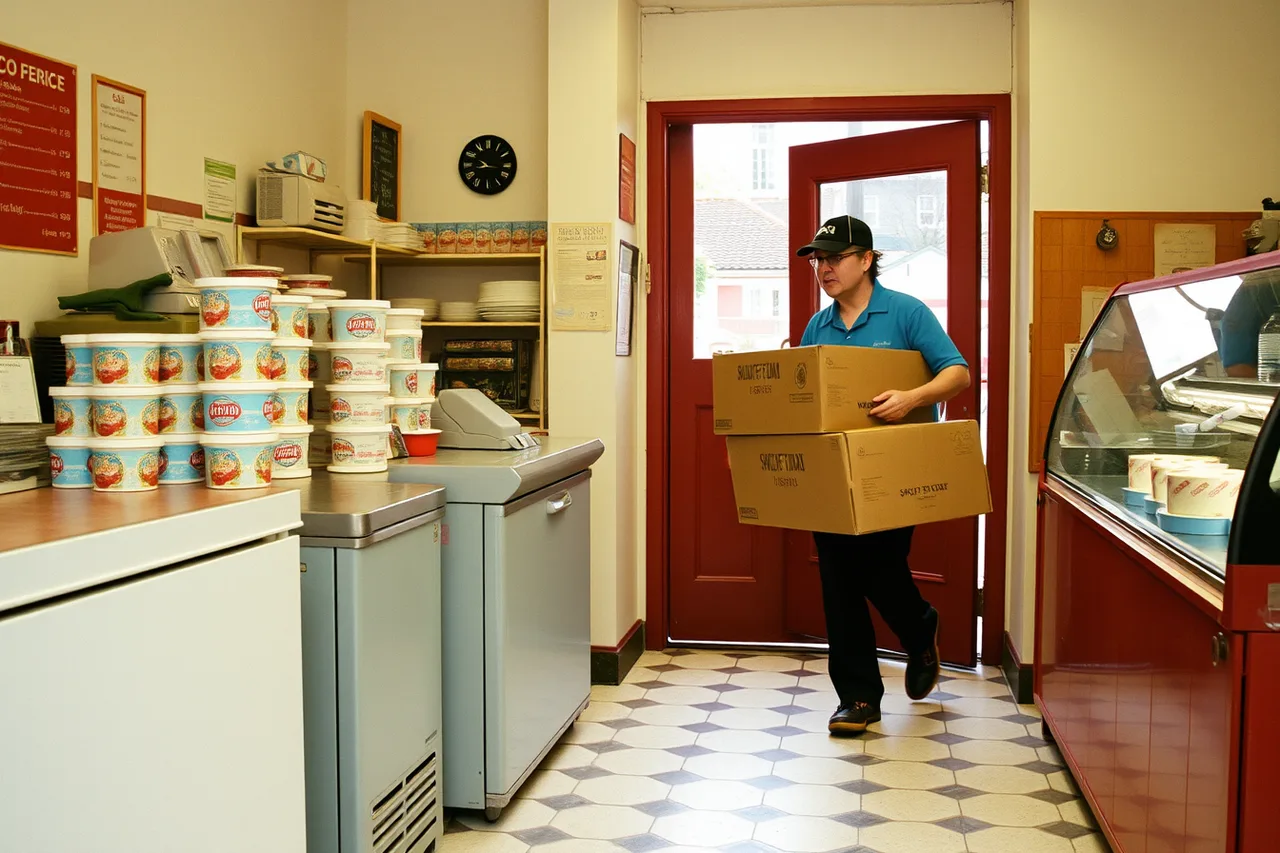
- What is being sold besides scoops?Pints in a freezer, cakes in a case, a wholesale delivery going out of the back door. These are the winter lines, and their presence tells you whether the shop has a year or a season.
- How is the sale rung up?Whether the staff select a product line or press a generic key tells you whether the shop can answer any question about its own menu later.
- What is happening in the quiet moment?Restocking, wiping, prepping, or standing still. The quiet moment is where a shop's discipline lives.
Turning observations into decisions
Do not copy what you liked. Ask why it works there, and whether the reason exists in your shop.
- A shop with a spectacular case and eleven staff is not a model for a four-person counter.
- A shop with no seating in a town where everyone walks is not a model for one where everyone drives.
- A shop with a long take-home freezer may be selling in months you cannot, because it has a different street and a different set of expansion routes open to it.
The genuinely transferable observations are usually the cheap ones: the acknowledgment within a few seconds, the honest allergen answer, the labels, and the person in charge being visible. All four are training rather than capital.
Watching a market rather than a shop
If you see a place to trade, not a shop to learn from, your questions change. Season length, year-round residents, evening street life, rent, and whether anyone will work for you become the material.
General market research lenders expect is covered by U.S. Small Business Administration: SBA Business Guide. The pavement work is described in the site selection framework.
Two more things travel between jurisdictions badly. What a frozen dessert may be called and what a premises must have are set locally: the agency for each state is listed in the U.S. Food and Drug Administration: State Retail and Food Service Codes and Regulations directory, and elsewhere it is the national or municipal food authority.
Those requirements sit with the licensing questions this trade raises, and a beautiful idea seen abroad can be unbuildable at home for reasons that have nothing to do with the idea.
The shops that impress most are usually managed rather than merely staffed. The supervisory work behind a smooth counter is described in the U.S. Bureau of Labor Statistics: Food Service Managers occupational profile, and it is the invisible half of everything on the list above.
Using the list on yourself
Walk in as a stranger, or send someone who will tell you the truth, and score all twenty-five. Most owners find three or four things they stopped seeing years ago: a faded sign, a case with gaps at peak, a staff answer that says nothing.
Fix those before spending anything on bringing more people to the door, and before deciding your prices are the reason people are not coming, which is settled by what a serving has to clear across the year.
Common questions
Where should I go to see good shops?
Wherever you can reach on a warm evening. Distance matters less than seeing shops at their busiest, because a shop at peak reveals everything on this list at once.
Should I introduce myself to the owner?
Buy something first, and go at a quiet time if you want to talk. Most owners are generous with anyone who is not a competitor across the road, and the conversation is worth more than the observation.
What if my shop scores badly?
Then you have a list of specific, mostly cheap actions, which is a better outcome than a list of names.
Is it worth traveling abroad to see shops?
If you can, yes, for the product ideas and the case work. Be careful about copying anything structural, because permissions, dairy supply and labeling rules differ and are set where you trade.